


Your HVAC is running, the fan is spinning, but the air coming out of the vents is warm. That’s not a minor inconvenience — it means your system has stopped doing its one job. The good news: most causes of an AC or HVAC blowing warm air are identifiable and fixable, often without an emergency service call.
Here are the most common reasons your system is pushing warm air instead of cold:
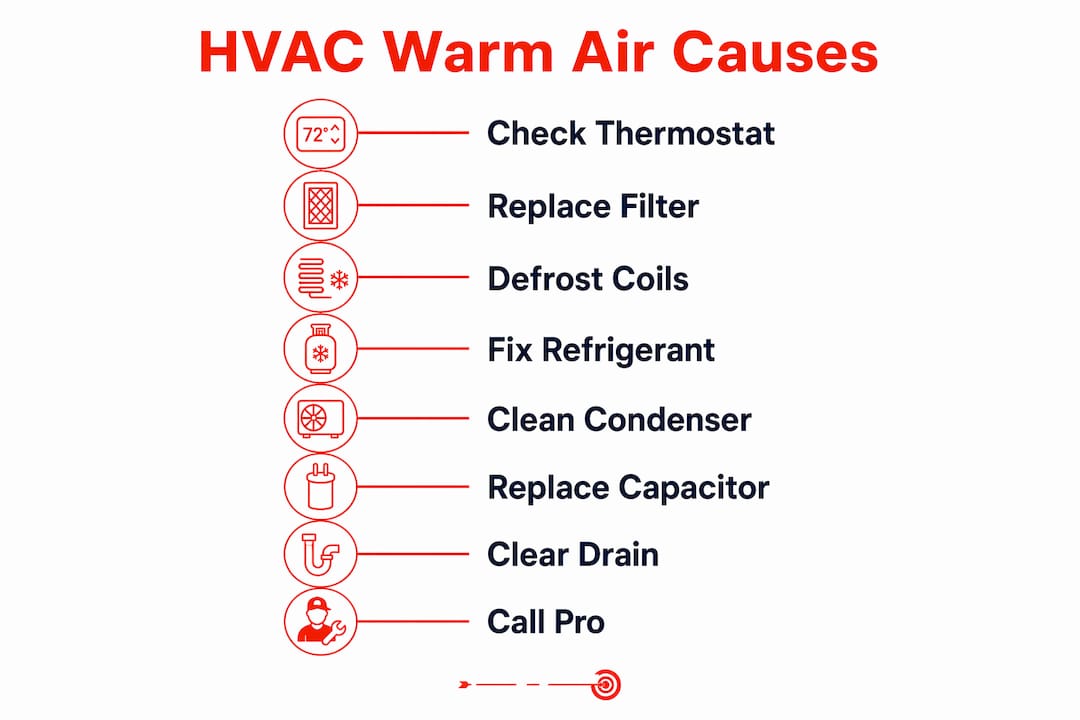
- Wrong thermostat setting — fan set to “ON” instead of “AUTO,” or mode left on “HEAT”
- Dirty or clogged air filter — restricted airflow starves the evaporator coil, causing it to freeze or lose cooling capacity
- Low refrigerant or a refrigerant leak — without enough refrigerant, the system can’t absorb heat from indoor air
- Frozen evaporator coils — ice buildup blocks heat exchange entirely
- Blocked or dirty outdoor condenser — debris prevents heat from escaping outside
- Failed run capacitor — the outdoor fan hums but won’t spin, killing compressor function
- Tripped circuit breaker — the outdoor unit loses power while the indoor blower keeps running
- Clogged condensate drain — triggers a safety shutoff that stops cooling but leaves the fan on
Table of Contents
- How your HVAC system actually cools your home
- 8 reasons your HVAC is blowing warm air
- How to troubleshoot warm air from your HVAC step by step
- Preventive maintenance that keeps your AC blowing cold
- When to stop troubleshooting and call a professional
- Expert advice from Target Air Systems on protecting your system
- When your HVAC needs more than a quick fix
- FAQ
- Key Takeaways
How your HVAC system actually cools your home
Understanding what’s supposed to happen makes it much easier to spot what’s gone wrong. Your HVAC system doesn’t create cold air — it moves heat. Warm indoor air passes over the evaporator coil, refrigerant inside that coil absorbs the heat, and the now-cooled air gets pushed back into your home. The refrigerant then carries that heat to the outdoor condenser unit, where it’s released outside.
Every component in that chain matters:
- Thermostat — tells the system when to start and stop cooling cycles
- Air filter — keeps dust and debris off the evaporator coil; a clogged filter chokes airflow
- Evaporator coil (indoor) — absorbs heat from your indoor air using refrigerant
- Compressor — pressurizes the refrigerant so it can cycle between indoor and outdoor units
- Condenser coil (outdoor) — releases absorbed heat to the outside air
- Blower fan — moves air across the evaporator coil and through your ductwork
When any one of these fails or gets restricted, the heat-transfer process breaks down. The blower keeps running, but it’s pushing air that was never actually cooled.
8 reasons your HVAC is blowing warm air
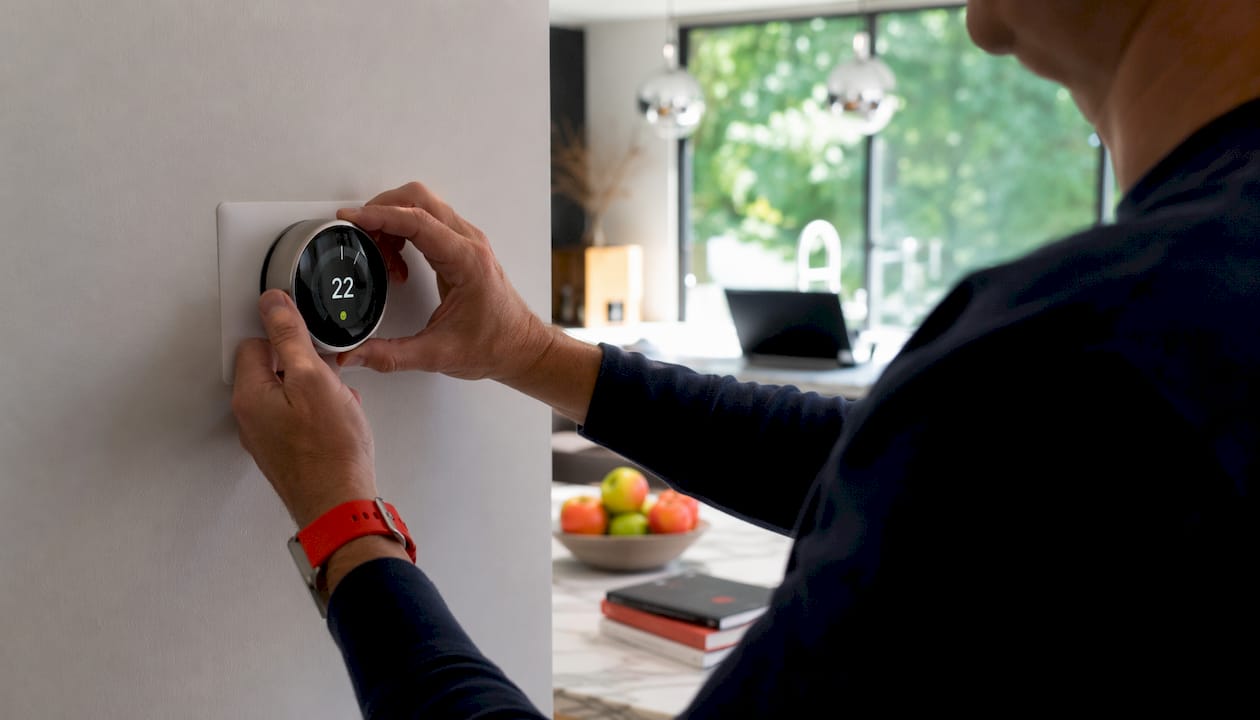
1. Your thermostat is set incorrectly
This is the most overlooked cause, and it’s worth checking first. If the fan is set to “ON” rather than “AUTO,” it runs continuously — even when the system isn’t in a cooling cycle, which means it’s circulating unconditioned air. If the mode is set to “HEAT” or “EMERGENCY HEAT,” the system is actively warming your home. Thermostat calibration issues can also prevent cooling cycles from engaging at all.
2. A dirty air filter is blocking airflow
A clogged filter is the single most common cause of AC cooling problems. When airflow drops, the evaporator coil can’t absorb enough heat, and in some cases it freezes solid. Either way, the air coming out of your vents won’t be cold. Filters should be replaced regularly depending on usage and filter type.
3. Frozen evaporator coils
Ice on the evaporator coil is a symptom, not a root cause. Restricted airflow or low refrigerant are the two most common triggers. When the coil ices over, it can’t exchange heat at all — the blower just pushes air over a block of ice. If you see frost on the refrigerant lines near the indoor unit, turn the system off and let it thaw before doing anything else.
4. Low refrigerant or a refrigerant leak
Refrigerant doesn’t get “used up” — if your system is low, there’s a leak somewhere. Low refrigerant means the system can’t absorb enough heat from indoor air, so it blows warm. Topping off the refrigerant without finding and fixing the leak is a temporary fix at best. This one requires a licensed technician — handling refrigerants without EPA certification is illegal.
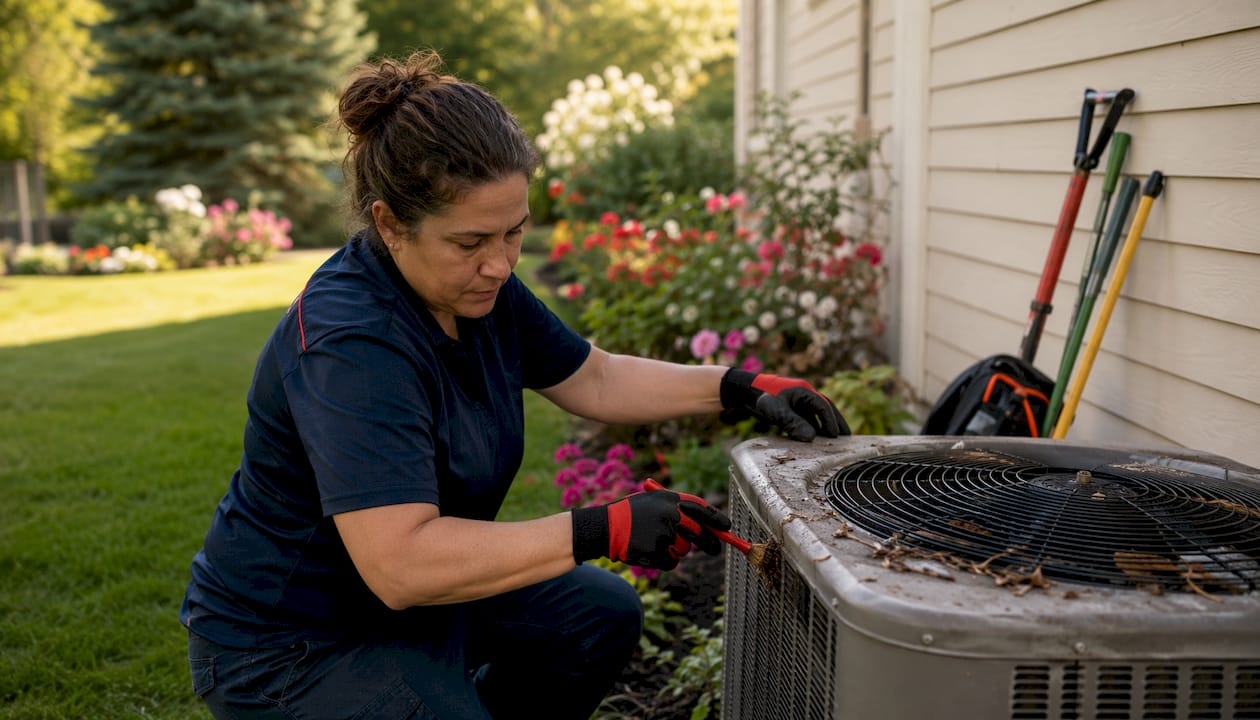
5. A blocked or dirty outdoor condenser
The outdoor unit needs to release heat to the outside. When the condenser coil is covered in dust, pollen, or yard debris, it can’t shed heat efficiently, and the whole system backs up. Keep at least two feet of clearance around the unit and rinse the coil fins with a garden hose annually.
6. A failed run capacitor
The run capacitor gives the outdoor fan motor and compressor the electrical boost they need to start and keep running. When it fails, you’ll often hear the outdoor unit humming but the fan won’t spin. Capacitor failure is a common cause of summer emergency AC calls. The indoor blower keeps running, pushing uncooled air through the house.
Pro Tip: Stand near the outdoor unit and listen. A loud hum with no fan movement is a classic capacitor failure signature. Don’t try to spin the fan blade manually — that’s a shock hazard.
7. A tripped circuit breaker
Most central AC systems run on a split circuit: one breaker for the indoor air handler, one for the outdoor condenser. If the outdoor breaker trips, the indoor blower keeps running — but there’s no cooling happening. Check your electrical panel for a tripped breaker before calling anyone.
Safety Warning: If the breaker trips again immediately after you reset it, stop. Repeatedly resetting a tripping breaker is a fire hazard. That’s a job for a licensed electrician, not a homeowner with a flashlight.
8. A clogged condensate drain line
As your AC cools air, it pulls moisture out of it. That water drains through a condensate line. When algae or debris blocks that line, a float switch triggers a safety shutoff that stops the cooling cycle — but the blower fan keeps running. The result: warm, humid air from every vent. A wet/dry vac on the drain line access port often clears it.
How to troubleshoot warm air from your HVAC step by step
Work through these checks in order before calling a technician. Most of them take under five minutes.
- Check the thermostat first. Confirm it’s set to “COOL,” the temperature is set below the current room temperature, and the fan is on “AUTO” not “ON.”
- Inspect the air filter. Pull it out and hold it up to light. If you can’t see light through it, replace it. A gray, matted filter is starving your system.
- Look at the outdoor unit. Is the fan spinning? Is there ice on the refrigerant lines? Is the unit buried in leaves or grass clippings? Clear any debris and give the unit room to breathe.
- Check the circuit breaker panel. Look for any breaker that’s in the middle position (tripped). Reset it once. If it trips again, stop and call an electrician.
- Look for ice on the indoor unit. If the refrigerant lines near the air handler are frosted, turn the system off and set the fan to “ON” only to thaw the coil. Don’t run cooling until the ice is gone.
- Turn the system off if warm air persists. Running a malfunctioning AC risks compressor seizure, which can be costly to repair or replace. Shutting it off protects the most expensive component in the system.
Pro Tip: After turning the system off, wait at least 30 minutes before restarting. This allows internal pressure to equalize and gives the control board time to reset — skipping this step can cause the system to short-cycle or throw a fault code.
For a full walkthrough on restarting safely, see Target Air Systems’ guide on resetting your HVAC system.
Preventive maintenance that keeps your AC blowing cold
Most warm air calls are preventable. The fixes aren’t complicated — they’re just easy to skip until something breaks.
- Replace filters every 30–90 days. Homes with pets or high dust levels need the shorter interval. A fresh filter is the cheapest maintenance you can do.
- Keep the outdoor unit clear. Trim back shrubs, rinse the coil fins each spring, and never stack anything against the unit.
- Schedule a professional tune-up every spring, before cooling season starts. A technician will check refrigerant levels, clean coils, inspect electrical components, and test the capacitor — catching failures before they strand you in a heat wave.
- Watch for early warning signs. Long run times, uneven cooling room to room, or humidity that feels higher than usual are all signals that something is off.
Pro Tip: Book your annual tune-up in March or April. HVAC companies fill up fast once temperatures climb, and a spring appointment usually means shorter wait times and better scheduling flexibility.
Deferred maintenance is one of the leading causes of premature HVAC failure. A $150 tune-up is a much easier conversation than a $5,000 system replacement.
When to stop troubleshooting and call a professional
Some problems are genuinely beyond what a homeowner should attempt. Call a licensed HVAC technician when you see any of these:
- Warm air persists after you’ve checked the thermostat, filter, breaker, and outdoor unit
- Ice buildup on coils that returns after thawing
- The outdoor unit hums but the fan won’t spin (capacitor failure)
- Any sign of refrigerant leak: hissing sounds, ice on lines, or oil residue near fittings
- A breaker that trips immediately after resetting
- The condenser fan isn’t running despite the unit having power
Safety Warning: DIY refrigerant handling is illegal without EPA Section 608 certification and can cause serious injury. Electrical faults that keep tripping breakers indicate a wiring problem that poses a real fire risk. Neither of these is a YouTube tutorial situation.
Pro Tip: If you’re unsure whether the compressor is running, place your hand near (not on) the outdoor unit’s refrigerant lines. The larger line should feel cool to the touch when the system is cooling properly. If both lines are warm, the compressor likely isn’t running.
Expert advice from Target Air Systems on protecting your system
Target Air Systems’ certified technicians see the same patterns repeatedly. Here’s what they recommend:
- Turn the system off immediately when warm air persists. Compressor damage from running a malfunctioning unit is the most expensive repair call they make.
- Use the 16-to-22-degree rule to check cooling performance: measure the temperature at a return air vent and at a supply vent. A split below 14 degrees indicates a poorly performing system. An infrared thermometer makes this check fast and accurate.
- Identify capacitor failure before calling by listening for outdoor unit humming with no fan movement. That diagnosis alone helps the technician arrive with the right part.
- Don’t skip annual maintenance. Target Air Systems offers upfront pricing with no hidden fees, and their technicians are screened and certified — so the tune-up you schedule in spring is the same quality as the emergency call in August.
Key Expert Tips: Turn off the system when warm air persists. Wait 30 minutes before restarting. A temperature split below 14°F means the system needs professional attention. Annual maintenance prevents the majority of warm air calls.
When your HVAC needs more than a quick fix
If you’ve worked through the troubleshooting steps and your system is still not cooling, the problem is past the DIY stage. Target Air Systems handles exactly this: a certified technician arrives with upfront pricing, diagnoses the real issue, and completes the repair before you pay a cent. No surprise invoices, no guessing.
They serve homeowners across Natick, Canton, Framingham, Wayland, and surrounding communities in Massachusetts. Whether it’s a refrigerant leak, a failed capacitor, or a system that’s simply reached the end of its life, their team has seen it and fixed it. For professional AC services or to schedule a tune-up, reach out to Target Air Systems directly and get a quote before any work begins.
FAQ
How do I fix my AC blowing warm air?
Start with the thermostat (confirm “COOL” mode and “AUTO” fan), then check and replace the air filter, inspect the outdoor unit for debris or a non-spinning fan, and check your circuit breaker. If warm air continues after those steps, turn the system off and call a licensed technician.
Should I turn my AC off if it’s blowing hot air?
Yes. Running a malfunctioning AC risks compressor seizure, which costs $900–$2,800 to repair. Shut the system off, wait 30 minutes, and then call a professional if basic checks don’t resolve the issue.
Is it safe to run an AC that blows hot air?
Short-term, it won’t cause immediate harm to you, but it can cause serious damage to the compressor. If the outdoor unit is running without cooling, continued operation risks a costly compressor failure.
How do I know if my AC has a refrigerant leak?
Signs include warm air despite the system running, ice on the refrigerant lines, a hissing or bubbling sound near the unit, or oil residue around fittings. Refrigerant leaks require a licensed technician — topping off without fixing the leak is only a temporary solution.
Key Takeaways
A dirty air filter, thermostat error, refrigerant leak, or failed capacitor accounts for the majority of HVAC warm air calls, and most can be identified in under ten minutes with the checks above.
| Point | Details |
|---|---|
| Check the thermostat first | Confirm “COOL” mode and “AUTO” fan before any other diagnosis. |
| Dirty filters are the top cause | Clogged filters restrict airflow and are the most common reason AC systems stop cooling, accounting for about 40% of service calls. |
| Turn off the system if warm air persists | Running a malfunctioning AC risks compressor seizure, which costs $900–$2,800 to repair. |
| Use the 16-to-22-degree rule | A temperature split below 14°F between return and supply air signals a poorly performing system. |
| Target Air Systems | Certified technicians offer upfront pricing and complete repairs before payment — serving Natick, MA and surrounding communities. |