


What is short cycling in an HVAC system?
Short cycling is when your HVAC system turns on, runs for just a few minutes, shuts off, then starts right back up again, never completing a full conditioning cycle. A healthy system runs for multiple minutes per cycle, several times per hour. When cycles become very short, that’s short cycling, and it’s a problem worth taking seriously.
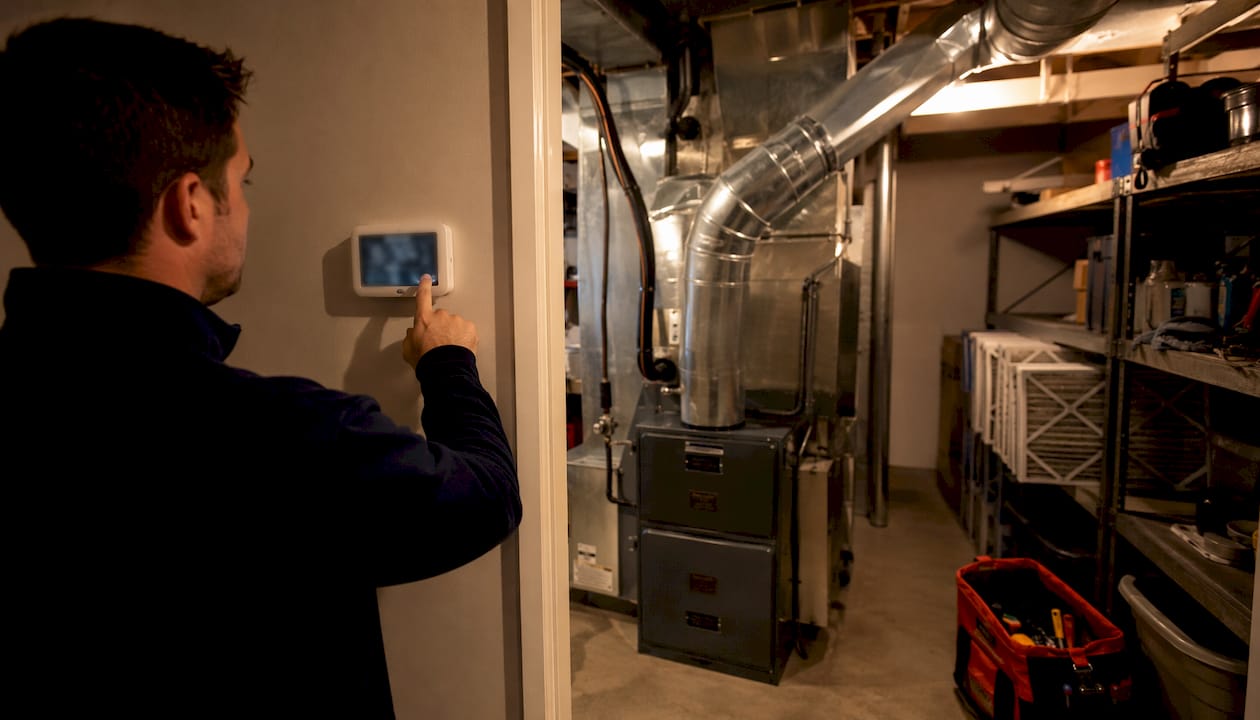
The system never gets the chance to reach steady operating efficiency, so your home stays uncomfortable while the equipment takes a beating. Think of it like a car that stalls every block. You’re burning fuel, wearing out the engine, and getting nowhere fast.
Key facts about HVAC short cycling:
- Normal cycle length: 15–20 minutes per cycle, several times per hour
- Short cycling threshold: cycles under 3–5 minutes
- Immediate effects: poor humidity control, uneven temperatures
- Long-term risks: compressor damage, higher energy bills, shortened equipment life
- Root causes range from a dirty filter to a fundamentally oversized system
What causes an HVAC system to short cycle?
Short cycling rarely has just one cause. Several common problems can trigger it, and sometimes more than one is at play at the same time.
- Oversized system. An oversized HVAC unit cools or heats the space so fast that the thermostat hits its set point before the system finishes a full cycle. The result is clammy, uncomfortable air even when the temperature reads correctly.
- Thermostat problems. A thermostat placed near a sunny window, a lamp, or a kitchen appliance reads artificially high temperatures and triggers the system to cycle on and off prematurely.
- Dirty or clogged air filter. Restricted airflow forces the evaporator coil to get too cold, eventually icing over. The system’s safety sensors detect the pressure drop and shut the unit down to prevent damage.
- Refrigerant issues. A refrigerant leak drops system pressure below safe operating levels, tripping the low-pressure switch and causing an automatic shutdown. An overcharged system can trip the high-pressure switch instead.
- Frozen evaporator coil. Ice buildup, often caused by low airflow or low refrigerant, forces repeated safety shutoffs.
- Electrical or control board faults. Faulty wiring, a failing capacitor, or a damaged control board can send erratic signals that cause the compressor to start and stop unpredictably.
- Clogged condensate drain. Many systems have a float switch in the drain pan. When the drain line clogs and water backs up, the float cuts power to the compressor until the water clears.
How short cycling damages your system and comfort
Short cycling does real damage, and it compounds quickly. Every startup puts stress on the compressor, the most expensive component in your system. Compressor startups draw far more amperage than normal operation, and when a system short cycles repeatedly, that startup stress never lets up. The compressor never builds steady lubrication pressure, which accelerates wear on bearings and valve assemblies.
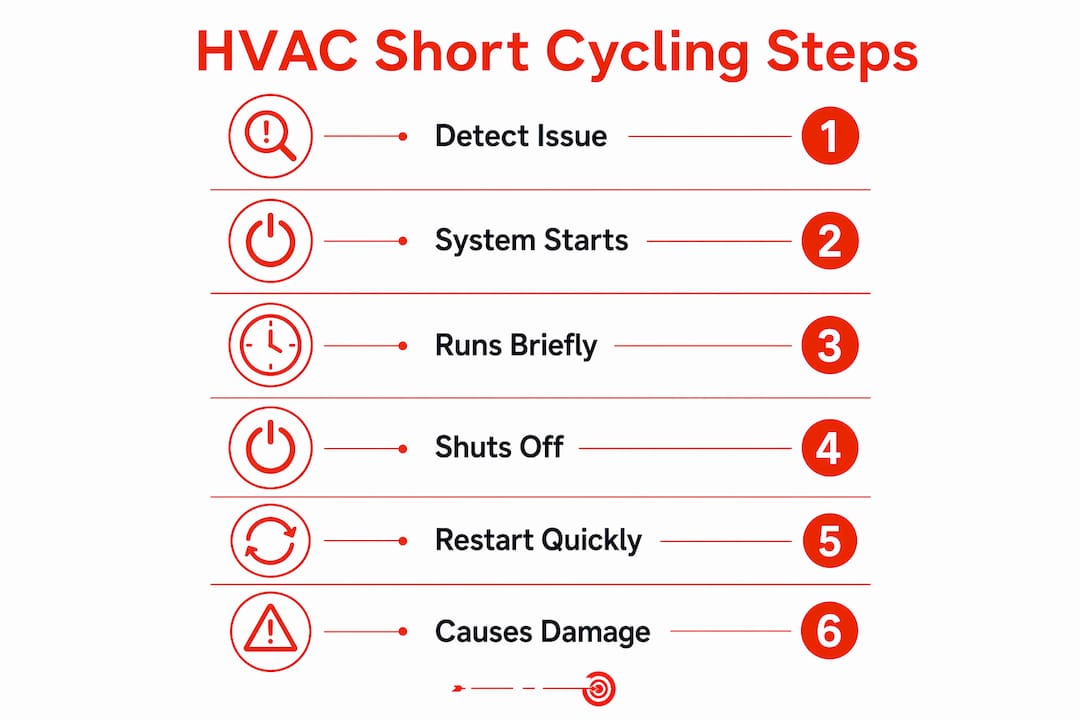
Left unaddressed, compressor replacement can be very costly depending on the equipment. A system that short cycles for 30 days can cause more compressor damage than five years of normal operation.
Beyond the compressor, here’s what short cycling does to your home and system:
- Higher energy bills. The system never reaches steady-state efficiency, so every cycle burns more energy than it should.
- Poor dehumidification. The evaporator coil needs time to cool down and pull moisture from the air. Short cycles leave rooms feeling sticky and clammy even when the thermostat reads the right temperature.
- Uneven temperatures. Rooms far from the air handler may never get conditioned air before the system shuts off again.
- Accelerated wear on contactors and motors. Frequent electrical switching causes arcing on contactors, wearing them out far faster than normal.
- Shortened equipment lifespan. What should last 15–20 years may need replacement in 8–10 if short cycling goes uncorrected.
Understanding premature HVAC failure starts with recognizing that short cycling is one of the fastest ways to get there.
How do you know if your HVAC is short cycling?
You don’t need a technician to spot the warning signs. Most homeowners can identify short cycling through simple observation.
- Time the cycles. Count how long the system runs before shutting off. Cycles consistently under five minutes are a clear red flag.
- Listen for rapid start/stop sounds. The compressor clicking on and off every few minutes, especially on a hot day when it should be running steadily, is a strong indicator.
- Check for uneven cooling or heating. If some rooms never reach the set temperature while others feel fine, the system isn’t completing full distribution cycles.
- Look for a frozen evaporator coil. Ice on the indoor coil or refrigerant lines points to airflow or refrigerant problems that often cause short cycling.
- Watch your energy bills. A spike in electricity costs without a change in usage habits often traces back to a system stuck in constant startup mode.
Pro Tip: If your thermostat has a cycle log or runtime history, pull it up. Many modern thermostats, including Ecobee and Nest models, display runtime per cycle, which makes it easy to confirm whether cycles are abnormally short without guessing.
If you see ice on the coil, run fan-only mode for several hours before switching cooling back on. Turning the system straight back to cooling before the ice fully thaws will just trigger another short cycle loop.

How to fix and prevent HVAC short cycling
Some fixes are straightforward DIY tasks. Others require a licensed technician. Here’s where to start:
- Replace the air filter first. A clogged filter is the most common and easiest fix. Check it monthly and replace it every 1–3 months depending on your home’s dust and pet hair levels.
- Clear blocked vents and registers. Furniture, rugs, and closed vents restrict airflow just like a dirty filter. Walk through your home and make sure every supply and return vent is open and unobstructed.
- Reposition or replace the thermostat. If the thermostat sits near a window, lamp, or appliance, move it to an interior wall away from heat sources. If it’s old or malfunctioning, upgrading to a programmable or smart model often resolves erratic cycling.
- Clean the condenser unit. Remove leaves, grass clippings, and debris from around the outdoor unit. Blocked condenser fins reduce heat rejection and can trigger high-pressure shutoffs.
- Clear the condensate drain line. Use a wet/dry vacuum on the exterior drain exit to pull out algae and debris. This takes five minutes and can prevent a float-switch shutdown.
- Schedule refrigerant service. Refrigerant work requires an EPA Section 608 certification. If you hear hissing or see oily residue near refrigerant lines, call a technician for a leak check and proper recharge.
- Get a preventive maintenance inspection. Annual tune-ups catch coil fouling, electrical wear, and refrigerant drift before they escalate into short cycling or compressor failure.
- Right-size any replacement system. If your system is oversized, no amount of maintenance will permanently fix the short cycling. Proper sizing using Manual J load calculations from ACCA is the only reliable method. Explore proper HVAC sizing before any replacement purchase.
Repeated short cycling on a heat pump specifically can accelerate wear on reversing valves and refrigerant seals, making heat pump repair a more urgent call than it might seem.
Why professional HVAC service is the right call for short cycling
DIY fixes handle the surface causes. A certified technician handles everything else.
- Specialized diagnostic tools. Technicians use manifold gauges, clamp meters, and combustion analyzers to pinpoint refrigerant charge, electrical faults, and airflow deficits that no visual inspection can catch.
- Root cause identification. Short cycling often has layered causes. A tech finds the primary fault instead of treating symptoms one at a time.
- Compressor protection. Catching short cycling early, before compressor damage sets in, is the difference between a $200 service call and a $5,000+ repair.
- Certified refrigerant handling. Refrigerant leaks require licensed technicians under EPA regulations. Improper handling is both illegal and dangerous.
- Upfront pricing, no surprises. Target Air Systems sends screened, certified technicians who provide upfront pricing before any work begins, with no hidden fees added after the fact.
- Guaranteed service. Target Air Systems completes the job before payment is required, backed by 5-star reviews and years of community trust in the Natick, MA area.
If your system keeps short cycling after a filter change and coil cleaning, or if you suspect a refrigerant issue, schedule a diagnostic with Target Air Systems before the compressor pays the price.
Key Takeaways
Short cycling is one of the most damaging and preventable HVAC problems a homeowner can face, and catching it early saves thousands.
| Point | Details |
|---|---|
| Normal cycle length | Healthy systems run 15–20 minutes per cycle, several times per hour. |
| Short cycling threshold | Cycles under 3–5 minutes signal a problem that needs attention. |
| Compressor cost risk | Unaddressed short cycling can lead to compressor replacement costing $3,000 to $15,000. |
| Top DIY fix | Replace the air filter and clear blocked vents before calling a technician. |
| When to call a pro | Persistent short cycling, suspected refrigerant leaks, or unusual compressor noises require a certified technician. |
FAQ
How do I know if my HVAC is short cycling?
Time your system’s run cycles. If the unit shuts off in under 3–5 minutes repeatedly, especially on a hot or cold day, that’s short cycling. Inconsistent temperatures, sticky indoor air, and rising energy bills are common accompanying signs.
How long is considered short cycling?
A cycle under 3–5 minutes is generally considered short cycling, compared to the normal 15–20 minute cycle length for a properly sized and functioning system.
How do I stop my HVAC from short cycling?
Start with the filter and airflow. Replace a dirty filter, open blocked vents, and check the condensate drain. If the problem continues, call a technician to check refrigerant charge, thermostat placement, and system sizing.
How much does it cost to fix a short cycling AC?
Costs vary widely by cause. A filter replacement costs a few dollars. A refrigerant recharge runs $100 to $400 on average. Compressor replacement, the worst-case outcome of ignored short cycling, can reach $3,000 to $15,000 depending on the system.