


HVAC is defined as the system that heats, ventilates, and air conditions your home. For any homeowner or renter new to this topic, the four main system types are central split systems, ductless mini-splits, packaged units, and heat pumps. Knowing how to compare HVAC system types for beginners starts with two facts: your home’s existing ductwork and your local climate. Those two factors alone will eliminate half the options before you even look at price. Efficiency ratings like SEER2 and HSPF2 and a proper Manual J load calculation are the professional standards that separate a good installation from an expensive mistake.
What are the different HVAC system types and how do they work?
Every residential HVAC system falls into one of four categories. Each works differently, costs differently, and fits different homes.
Central split systems
A central split system has two main units: an outdoor compressor and an indoor air handler. The indoor unit connects to a network of ducts that carry conditioned air to every room. This is the most common setup in American homes built before 2000. If your home already has ductwork in good condition, a central split system is often the most cost-effective path.

Ductless mini-splits
A ductless mini-split connects an outdoor compressor to one or more wall-mounted indoor units. No ducts are needed. Each indoor unit controls its own zone, so you can heat or cool only the rooms you use. Central air systems use ducts to distribute air throughout the home, while mini-splits give you room-level control without any ductwork at all. That distinction matters most in older homes, additions, or spaces where running ducts is impractical.
Packaged units
A packaged unit combines heating and cooling into a single cabinet installed outside the home or on the roof. All components sit in one box, which simplifies maintenance and saves indoor space. These units are common in homes with crawl spaces, mobile homes, and light commercial buildings. They are a practical choice when indoor mechanical space is limited.
Heat pumps
A heat pump moves heat rather than generating it. In summer, it pulls heat out of your home. In winter, it pulls heat from outdoor air and brings it inside. This dual function makes heat pumps one of the most energy-efficient options available. They work best in moderate climates but newer cold-climate models perform well even in New England winters.
| System type | Ductwork needed | Best for | Heating and cooling |
|---|---|---|---|
| Central split | Yes | Homes with existing ducts | Both |
| Ductless mini-split | No | Older homes, additions, zoning | Both |
| Packaged unit | Sometimes | Limited indoor space | Both |
| Heat pump | Yes or no | Moderate to cold climates | Both |
How do you compare HVAC systems on efficiency, cost, and installation?
Efficiency and cost are the two numbers that matter most when you compare HVAC system types. Getting these right before you buy saves money for years.
Understanding SEER2 and HSPF2
SEER2 measures cooling efficiency and HSPF2 measures heating efficiency for heat pumps. These ratings replaced older standards because older efficiency ratings could overestimate real-world performance by 10–18%. Always ask contractors to quote systems using current SEER2 and HSPF2 numbers, not the older SEER and HSPF figures. A higher rating means lower monthly energy bills, but also a higher upfront price.
Installation costs by system type
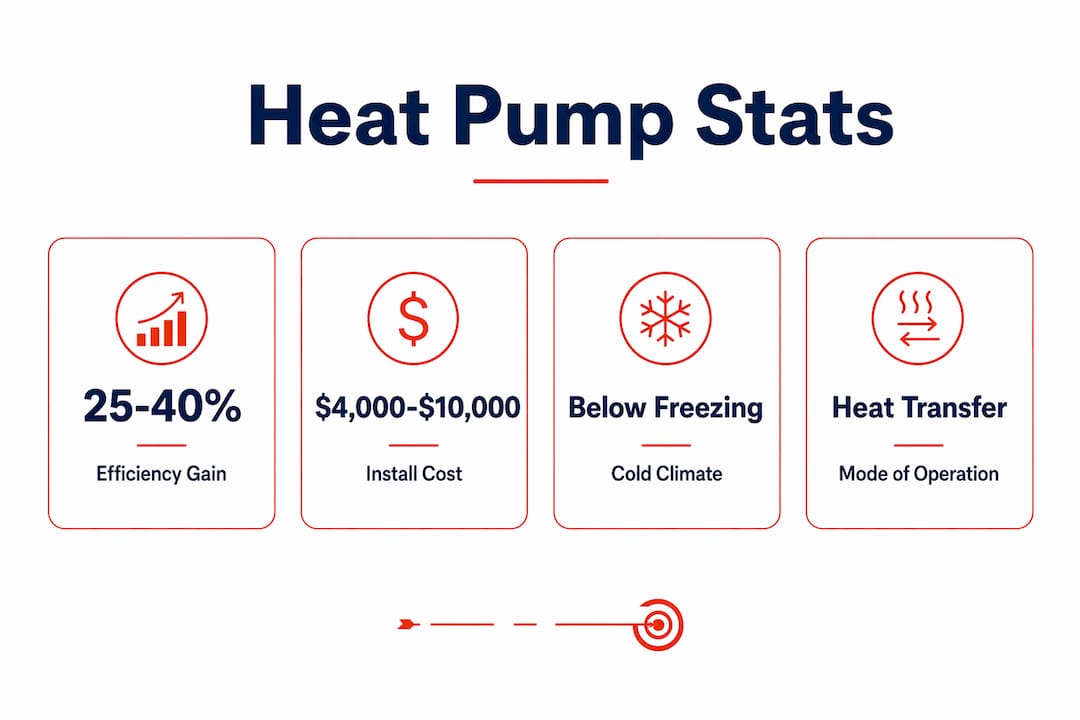
Central AC installation typically costs $3,500 to $8,000. Heat pumps run $4,000 to $10,000 depending on complexity and climate. For homes without existing ductwork, the math changes fast. Installing new ductwork adds $5,000 to $15,000 to a central system project. A ductless mini-split avoids that expense entirely, which makes it the smarter financial choice for homes without ducts.
Energy savings and incentives
Mini-split systems run 25–40% more efficiently than traditional central air because they eliminate duct losses and use inverter technology. Zoning control, which lets you condition only occupied rooms, can cut utility costs by 30–50%. Federal tax credits and rebates can offset 15–30% of installation costs for high-efficiency systems. Check the Database of State Incentives for Renewables and Efficiency (DSIRE) for programs available in Massachusetts.
Pro Tip: Ask your contractor for the SEER2 rating on every system they quote. If they quote using the old SEER number, ask them to convert it. The difference can change your payback calculation significantly.
| Factor | Central split | Ductless mini-split | Heat pump |
|---|---|---|---|
| Typical install cost | $3,500–$8,000 | Lower without ducts | $4,000–$10,000 |
| Ductwork required | Yes | No | Either |
| Efficiency rating | SEER2 | SEER2 | SEER2 + HSPF2 |
| Zoning capability | Limited | Yes | Depends on type |
| Federal incentives | Possible | Possible | Yes |
What factors determine the best HVAC system for your home?
The right system depends on your home, not on what your neighbor has. A zoned HVAC system works very differently from a single-zone central system, and the wrong choice costs you comfort and money every month.
Work through these factors before you call a contractor:
- Existing ductwork. Good ducts favor central systems, while their absence makes ductless mini-splits the more practical and affordable option. Have a technician inspect your ducts for leaks and condition before assuming they are usable.
- Home size and layout. Open floor plans distribute air well from central systems. Homes with many small rooms, multiple floors, or additions benefit from the room-level control that mini-splits provide.
- Climate. Heat pumps perform best in climates with mild winters, though modern cold-climate models handle temperatures well below freezing. In Massachusetts, a heat pump paired with a backup heating source is a common and effective setup.
- Budget, upfront and long-term. A lower upfront cost can mean higher monthly bills. A higher-efficiency system costs more to install but pays back through lower energy costs over time. Calculate the total cost of ownership over 10 years, not just the installation invoice.
- Manual J load calculation. A Manual J calculation is the industry-standard method for sizing HVAC equipment to your specific home. It accounts for insulation, window area, ceiling height, and local climate. Any contractor who skips this step and sizes your system by square footage alone is guessing.
The Manual J point deserves extra attention. Oversized systems short-cycle, meaning they turn on and off too frequently. That wastes energy, wears out components faster, and leaves your home feeling humid in summer. Undersized systems run constantly and never reach your target temperature. Neither outcome is acceptable when you are spending thousands of dollars.
What mistakes do beginners make when choosing an HVAC system?
Most HVAC regrets come from three sources: wrong sizing, poor contractor selection, and outdated efficiency comparisons. All three are avoidable.
Sizing by square footage alone. Square footage is a starting point, not a sizing method. Proper HVAC sizing requires a Manual J load calculation that accounts for insulation levels, window placement, local climate data, and ceiling height. A contractor who quotes a system size without this calculation is not following industry standards.
Choosing a contractor on price alone. Installation quality affects system performance and lifespan more than the equipment brand. Even a premium unit fails early if installed poorly. Check that your contractor holds a Massachusetts HVAC license, pulls the required permits, and carries liability insurance. Read reviews on Google and the Better Business Bureau. Ask for references from recent installations.
- Verify the contractor’s state license number before signing anything.
- Confirm they will pull a permit for the installation.
- Ask whether they perform a Manual J calculation or use square footage shortcuts.
- Get at least two written quotes that specify equipment model numbers and SEER2 ratings.
Using outdated efficiency ratings. Older SEER and HSPF ratings can overestimate performance. Always compare systems using current SEER2 standards to get an accurate picture of what you will actually pay to run the system.
Pro Tip: Schedule your installation in spring or fall. Mild weather lets technicians test the system under real conditions before summer heat or winter cold arrives. You also avoid the peak-season rush when contractors are booked weeks out.
Key Takeaways
The single most important decision in choosing an HVAC system is whether your home has existing ductwork, because that one factor determines which system types are practical and cost-effective for you.
| Point | Details |
|---|---|
| Ductwork drives the decision | Homes with good ducts favor central systems; homes without ducts save money with mini-splits. |
| Use current efficiency ratings | Always compare systems using SEER2 and HSPF2, not older standards that overstate performance. |
| Require a Manual J calculation | Sizing by square footage alone causes oversizing, short-cycling, and early equipment failure. |
| Factor in total cost | Installation price plus 10 years of energy bills gives a truer cost than upfront price alone. |
| Vet your contractor carefully | Installation quality affects performance more than equipment brand; check licenses and permits. |
What I have learned after years of watching homeowners choose HVAC systems
The conversation I see go wrong most often is the one where a homeowner picks a system based on a neighbor’s recommendation without checking whether their homes share anything in common. A mini-split that works perfectly in a 1920s colonial with no ductwork is not automatically the right call for a 2005 ranch with a full duct system in good shape.
The single insight that changes how people think about this decision is the installation quality point. Homeowners spend hours comparing equipment brands and almost no time vetting the contractor. The equipment brand matters far less than whether the person installing it sizes it correctly, seals the refrigerant lines properly, and commissions the system before leaving. I have seen mid-range equipment outlast premium units by years because the installation was done right the first time.
Zoning is the other underrated factor. If you have a two-story home where the upstairs is always 10 degrees warmer than the downstairs, a single-zone central system will never fully solve that problem. A zoned system, whether ducted or ductless, addresses the root cause instead of just running the equipment harder.
My honest advice: start with your ductwork, get a Manual J calculation from every contractor you interview, and treat any contractor who skips that step as a red flag. The system type matters. The installation matters more.
— Warren
How Target Air Systems can help you choose the right system
Target Air Systems serves homeowners across the Natick, MA area with certified technicians who provide upfront pricing and no hidden fees. Every installation starts with a proper load calculation so your system is sized for your actual home, not a square footage estimate. Whether you are considering AC installation or a heat pump system, the team walks you through your options before any work begins. Homeowners in Framingham can request a consultation through local HVAC services and get a written quote with no obligation. Target Air Systems does not collect payment until the job is complete.
FAQ
What is the most efficient HVAC system type?
Ductless mini-splits are among the most efficient options available, running 25–40% more efficiently than central air systems by eliminating duct losses and using inverter-driven compressors.
Do I need ductwork for a mini-split system?
No. Ductless mini-splits connect an outdoor unit to wall-mounted indoor units through a small conduit, making them ideal for homes without existing ductwork.
What is a Manual J load calculation?
A Manual J load calculation is the industry-standard method for sizing HVAC equipment. It accounts for your home’s insulation, windows, ceiling height, and local climate to determine the correct system capacity.
Can a heat pump heat my home in a cold Massachusetts winter?
Modern cold-climate heat pumps operate effectively at temperatures well below freezing. Many Massachusetts homeowners pair a heat pump with a backup heating source for the coldest days of the year.
How do SEER2 and HSPF2 differ from older ratings?
SEER2 and HSPF2 are updated efficiency standards that reflect real-world operating conditions more accurately than older SEER and HSPF ratings, which could overestimate performance by 10–18%.