


HVAC failure in New England winters is primarily caused by restricted airflow, improper system sizing, refrigerant issues, and weather-related damage to outdoor components. These are not random breakdowns. They follow predictable patterns that worsen every time temperatures drop below freezing in Massachusetts, Connecticut, Rhode Island, and the rest of the region. Understanding what causes HVAC failure in New England winters gives you the power to act before your heating system quits on the coldest night of the year. Target Air Systems technicians see the same failure points repeat every season, and most of them are preventable.
What causes HVAC failure in New England winters?
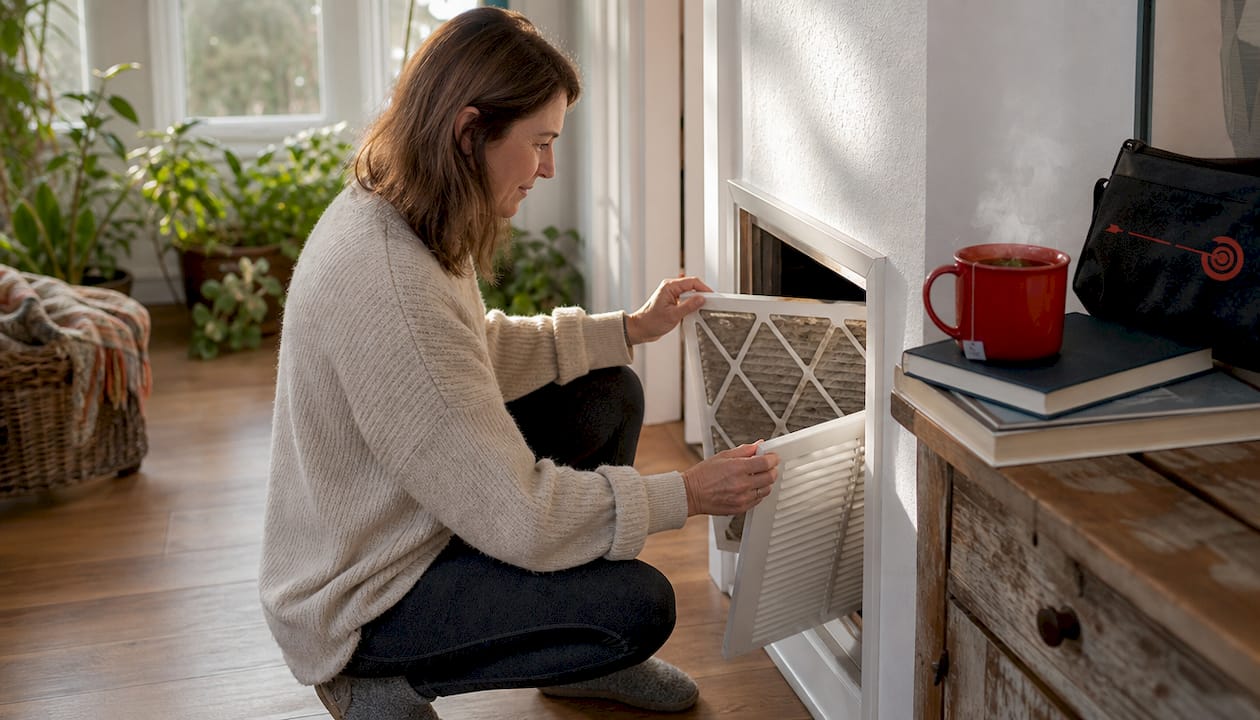
Dirty or clogged air filters are the number one cause of heating system failure. A clogged filter blocks airflow across the heat exchanger, causing it to overheat and trigger a safety shutdown. Your system does not fail because it is broken. It fails because it cannot breathe. Neglecting filter replacement can lead to repair costs exceeding $5,500, which makes a $10 filter look like the best investment you will ever make.
Blocked or closed supply vents compound the problem. When more than 50% of your supply vents are blocked, airflow balance collapses and the system strains to maintain temperature. The result is short cycling, uneven heat distribution, and accelerated wear on the blower motor and heat exchanger.
Pro Tip: Replace your air filter every month during the heating season, not every three months. New England winters run your system hard, and a filter that looks clean in October is often clogged by december.
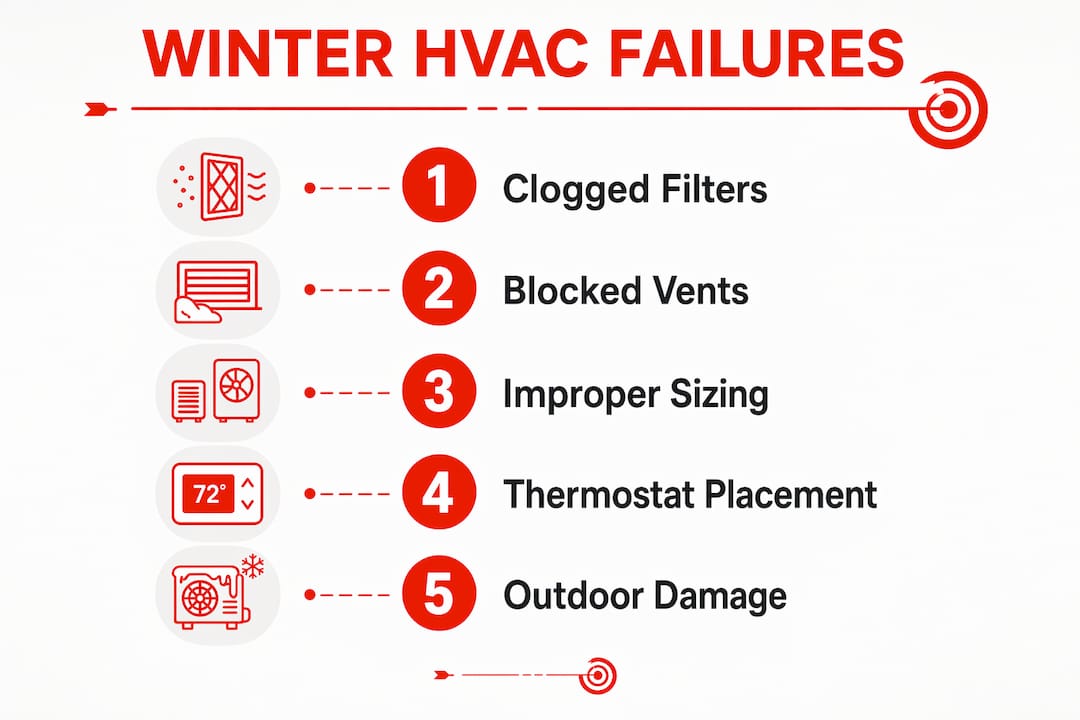
Beyond filters, improper system sizing and thermostat placement cause a significant share of winter HVAC system problems. Refrigerant issues and weather-related damage to outdoor units round out the top causes of heating failure across the region.
How does improper sizing cause winter heating failure?
Oversized and undersized HVAC systems both fail in winter, just in different ways. An oversized furnace or heat pump heats the space too quickly, shuts off before completing a full run cycle, then restarts minutes later. This pattern is called short cycling. Short cycling increases electricity usage by 20–40% in winter due to frequent compressor restarts and cuts years off the system’s life.
Between 40–60% of short-cycling furnace cases result from oversized equipment installed without a Manual J load calculation. Manual J is the industry-standard heat loss calculation that determines the correct equipment size for your home’s specific insulation, window area, and layout. Skipping it is the single most common installation mistake in residential HVAC.
An undersized system has the opposite problem. It runs continuously during a cold snap, never reaching the set temperature, and burns out components from sustained overload. Both scenarios are avoidable with proper sizing from the start.
Thermostat placement makes the situation worse when it is wrong. A thermostat mounted near a window, a drafty exterior wall, or a heat-generating appliance reads inaccurate temperatures. Placing sensors on interior walls away from direct sunlight and heat sources prevents false readings that trigger unnecessary cycling.
Here are four thermostat and sizing checks that reduce winter HVAC problems:
- Confirm your system was sized using a Manual J calculation, not a rule-of-thumb square footage estimate.
- Check that your thermostat is mounted on an interior wall, away from windows, exterior doors, and kitchen appliances.
- Set your thermostat to a consistent temperature rather than large setbacks, which force the system to recover from deep temperature drops.
- If your system runs for less than 30 minutes before shutting off, treat it as a short-cycling warning and call a technician.
Pro Tip: A properly sized system should run for 30–60 minutes or longer under normal winter conditions. Shorter run times almost always signal a sizing or thermostat problem.
How do New England winters damage outdoor HVAC components?
New England’s freeze-thaw cycles, heavy snow, and coastal salt air create a specific set of mechanical threats that warmer climates never face. Freeze-thaw cycles damage electrical insulation on outdoor units by expanding ice inside wiring, cracking the insulation, and increasing electrical resistance before the component fails entirely. This kind of damage builds invisibly over multiple seasons.
Outdoor coil frost is normal during heat pump operation. What is not normal is frost that the defrost cycle cannot clear. Heat pump defrost cycles are most frequent and energy-impacting between 20°F and 35°F under humid conditions, causing 8–18% seasonal capacity loss. Standard heat pumps lose significant heating capacity below 25°F, while cold-climate heat pumps maintain capacity down to 5°F and use demand-defrost controls that minimize unnecessary capacity loss.
Snow and ice buildup around the outdoor unit blocks airflow that the defrost cycle depends on. Blocked airflow from snow or vegetation causes frost accumulation that the defrost cycle cannot clear, forcing a safety shutdown. Maintaining 12–24 inches of clearance around the unit prevents this entirely.
Key outdoor unit protection steps for New England winters:
- Brush snow off the unit with a soft broom. Never use a shovel or hard tool, which dents coil fins.
- Never pour hot water on a frozen unit. Thermal shock causes hairline fractures in coils that permanently reduce heat transfer efficiency.
- Keep the area around the unit clear of leaves, ice dams, and vegetation year-round.
- Inspect wiring and insulation on outdoor components each fall before the heating season starts.
Salt air corrosion is a specific threat for coastal Massachusetts and Rhode Island homeowners. Salt accelerates oxidation on coil fins, electrical contacts, and refrigerant line connections. Annual coil cleaning and corrosion-resistant coatings extend outdoor unit life significantly in these areas.
What are the signs your HVAC system is failing in winter?
Many winter HVAC failures announce themselves before the system stops working entirely. Extreme cold acts as an exposure event, pushing already-degraded components to the point of failure. A system that runs fine in october may collapse in january because the cold finally overwhelms a worn part.
Watch for these warning signs:
- Frost on the outdoor unit that does not clear within 30–90 minutes. Normal defrost cycles resolve frost quickly. Persistent frost signals a refrigerant issue or a failed defrost control board.
- “AUX HEAT” running constantly on your thermostat display. Auxiliary heat activates when the heat pump cannot keep up. Occasional use is normal. Continuous use means the primary system is underperforming.
- Short run cycles under 15 minutes. This points to oversizing, a dirty filter, or a thermostat problem.
- Supply air that feels lukewarm rather than warm. Measure the temperature difference between your supply and return air registers. A healthy system produces a differential of 15°F–20°F. Less than that signals low refrigerant or airflow restriction.
Pro Tip: Before calling a technician, check your air filter, confirm all supply vents are open, and clear any snow from the outdoor unit. These three steps resolve a surprising number of common HVAC issues without a service call.
When symptoms persist after those checks, the problem is likely refrigerant loss, a failed sensor, or electrical damage from freeze-thaw cycles. These require a certified technician with diagnostic equipment.
Best winter HVAC maintenance practices for New England homes
Preventing heating failure costs far less than repairing it. The following maintenance practices address the most common causes of winter HVAC system problems before they become emergencies.
- Replace air filters monthly from november through march. Heavy heating season demands monthly changes, not seasonal ones.
- Schedule a professional tune-up each fall. A certified technician checks refrigerant charge, cleans coils, inspects electrical connections, and verifies defrost control operation before the first hard freeze.
- Calibrate and program your thermostat. Verify the thermostat reads accurately by comparing it to a separate thermometer. Set consistent temperatures to avoid large recovery demands.
- Clear the outdoor unit after every significant snowfall. Maintain the 12–24 inch clearance standard and inspect for ice buildup on the base pan.
- Address building envelope issues. Air leaks around windows, doors, and attic hatches force your HVAC system to work harder. Sealing these reduces system strain and lowers heating costs.
A year-round maintenance checklist keeps these tasks organized and prevents the most common causes of heating failure from slipping through the cracks. Homeowners who follow a structured maintenance schedule experience far fewer emergency breakdowns during peak winter demand.
Key Takeaways
Dirty air filters, improper sizing, thermostat misplacement, and New England’s freeze-thaw cycles are the four leading causes of HVAC failure in winter, and all four are preventable with consistent maintenance.
| Point | Details |
|---|---|
| Dirty filters cause shutdowns | Replace air filters monthly during the heating season to prevent heat exchanger overheating. |
| Oversizing triggers short cycling | Short cycling from oversized equipment increases electricity use by 20–40% and shortens system life. |
| Outdoor units need clearance | Maintain 12–24 inches of clearance and never use hot water to clear ice from outdoor coils. |
| Defrost cycles are normal | Persistent frost that does not clear within 90 minutes signals refrigerant loss or a failed defrost board. |
| Fall tune-ups prevent failures | A professional inspection before the heating season catches worn parts before cold weather forces them to fail. |
What I’ve learned after years of New England winters
The most expensive HVAC failures I see are not caused by old equipment or bad luck. They are caused by deferred maintenance and one specific misconception: homeowners believe their heat pump is broken when it goes into defrost mode. The unit steams, the airflow drops, and the thermostat reads below the set temperature. Many homeowners misinterpret normal defrost cycles as equipment failure, which leads to unnecessary service calls and, worse, homeowners overriding the defrost cycle and causing real damage.
The second thing I see constantly is systems that were never sized correctly. A contractor used a square footage rule of thumb, installed an oversized unit, and the homeowner has been dealing with short cycling and high bills ever since. The rule-of-thumb oversizing approach creates efficiency and comfort deficits that no repair can fix. The only real solution is a properly sized replacement.
New England’s climate is genuinely harder on HVAC equipment than most of the country. The combination of humid cold, heavy snow loads, salt air near the coast, and dramatic temperature swings from january thaws to deep freezes creates conditions that expose every weak point in a system. A unit that would last 18 years in North Carolina might last 12 in Massachusetts if it is not maintained properly.
My honest advice: treat your HVAC system like your car. You would not skip oil changes for three years and expect the engine to perform. The same logic applies here. Monthly filter changes, annual tune-ups, and clearing snow after storms are not optional extras. They are the baseline for reliable heat when you need it most.
— Warren
How Target Air Systems keeps your heat running all winter
Target Air Systems serves homeowners across Massachusetts with certified technicians who provide upfront pricing and no hidden fees. Whether you need a furnace tune-up before the first hard freeze or emergency heating repair in the middle of a cold snap, the team is equipped to diagnose and fix the most common causes of winter heating failure. Target Air Systems also specializes in heat pump services for homeowners navigating cold-climate performance questions. Service is not billed until the work is complete. Request a quote to schedule your winter inspection and get ahead of the season before temperatures drop.
FAQ
What is the most common cause of heating failure in winter?
Dirty or clogged air filters are the number one cause of heating system failure. They restrict airflow, overheat the heat exchanger, and trigger a safety shutdown.
Why does my heat pump struggle when it gets very cold?
Standard heat pumps lose significant heating capacity below 25°F. Cold-climate heat pumps maintain capacity down to 5°F and are the better choice for New England homes.
Is frost on my outdoor heat pump unit a sign of failure?
Frost on the outdoor unit is normal and cleared by automatic defrost cycles. Frost that persists beyond 30–90 minutes signals a refrigerant issue or a failed defrost control board.
How often should I replace my HVAC filter in winter?
Replace your filter every month during the heating season. Monthly replacement prevents the airflow restriction that causes the majority of winter HVAC breakdowns.
What does short cycling mean and why is it a problem?
Short cycling means your system turns on and off in rapid, brief cycles instead of completing full heating runs. It increases electricity use by 20–40% and is most often caused by oversized equipment or a misplaced thermostat.