


Types of heating and cooling systems are the various methods and equipment homeowners and property managers use to manage indoor climate efficiently and comfortably. The U.S. Department of Energy classifies residential heating into eight main categories: electric resistance, furnaces and boilers, wood and pellet heating, heat distribution systems, radiant heating, small space heaters, active solar heating, and heat pump systems. On the cooling and combined side, residential HVAC configurations include split systems, ductless mini-splits, packaged systems, and geothermal setups. Understanding these categories helps you choose the right equipment, avoid costly mistakes, and get the most from your energy budget.
What are the main types of heating and cooling systems?
The clearest way to understand heating systems is to separate two distinct ideas: the heat source and the heat distribution method. The DOE separates these categories explicitly because mixing them up leads to specification errors and poor purchasing decisions. A furnace is a heat source. Ductwork is a distribution method. They are not interchangeable terms.
Heat sources: what generates the warmth
- Electric resistance heating converts electricity directly into heat. It is simple and inexpensive to install, but it costs more to run than most alternatives because electricity rates are higher than gas in most U.S. markets.
- Furnaces and boilers burn natural gas, propane, oil, or use electricity to generate heat. Furnaces push warm air through ducts. Boilers heat water and distribute it through radiators or radiant floor systems.
- Wood and pellet heating uses combustion of solid fuel. Pellet stoves are more automated and cleaner burning than traditional wood stoves, making them a practical backup or primary heat source in rural areas.
- Active solar heating captures sunlight through collectors and transfers that energy to air or liquid distribution systems. It works best as a supplement rather than a standalone solution in most U.S. climates.
- Heat pumps move heat rather than generate it. Three main heat pump types exist: air-source, geothermal (ground-source), and water-source. Geothermal systems deliver higher efficiency in cold climates but carry a higher installation cost.
Heat distribution: how warmth reaches each room
Distribution methods include forced air through ducts, radiant panels or floors, baseboard convectors, and hydronic radiators. The distribution method you choose affects comfort, noise levels, and how well the system integrates with cooling equipment. Forced air ducting, for example, works with both furnaces and central air conditioning, making it the most common residential choice.

Pro Tip: If you are replacing a furnace, check whether your existing ductwork is sized correctly for the new unit. Oversized equipment with undersized ducts is one of the most common causes of uneven heating and high energy bills.
How are cooling and combined HVAC systems configured?
HVAC stands for heating, ventilation, and air conditioning. An HVAC system refers to the complete setup including all components working together. An HVAC unit refers to a single piece of equipment within that system. Carrier’s 2026 guidance makes this distinction clear, and it matters when you are getting quotes. A contractor who quotes you a “system” should be covering ducts, air handler, thermostat, and outdoor unit. A quote for a “unit” may cover only one component.
The four main residential HVAC configurations are:
- Split systems place the condenser and compressor outdoors and the air handler indoors. This is the most common setup in American homes. The indoor and outdoor units connect through refrigerant lines, and the air handler shares the home’s duct system with the furnace.
- Ductless mini-split systems mount individual air handlers in each room or zone, connected to an outdoor compressor. They require no ductwork, which makes them ideal for additions, older homes, or rooms that are difficult to reach with ducts.
- Packaged HVAC systems combine all components into a single outdoor cabinet. They are common in homes without basements or attics, particularly in the South and Southwest. Installation is simpler, but repair access can be more limited.
- Geothermal HVAC systems use ground-loop heat exchangers buried in the yard to transfer heat to and from the earth. They deliver very high efficiency year-round and have long lifespans, though upfront installation costs are significant.
Typical lifespans by system type
Planning a replacement budget requires knowing how long each system is expected to last. Angi’s 2026 data provides useful benchmarks for homeowners:
| System type | Typical lifespan |
|---|---|
| Split system | 15–20 years |
| Hybrid split | 20–25 years |
| Ductless mini-split | 10–15 years |
| Packaged heating and cooling | 15–20 years |
| Hydronic system | 25–50 years |
| Geothermal heat pump | 25–50 years |
| Zoned HVAC | 15–20 years |
| Portable unit | 5–10 years |
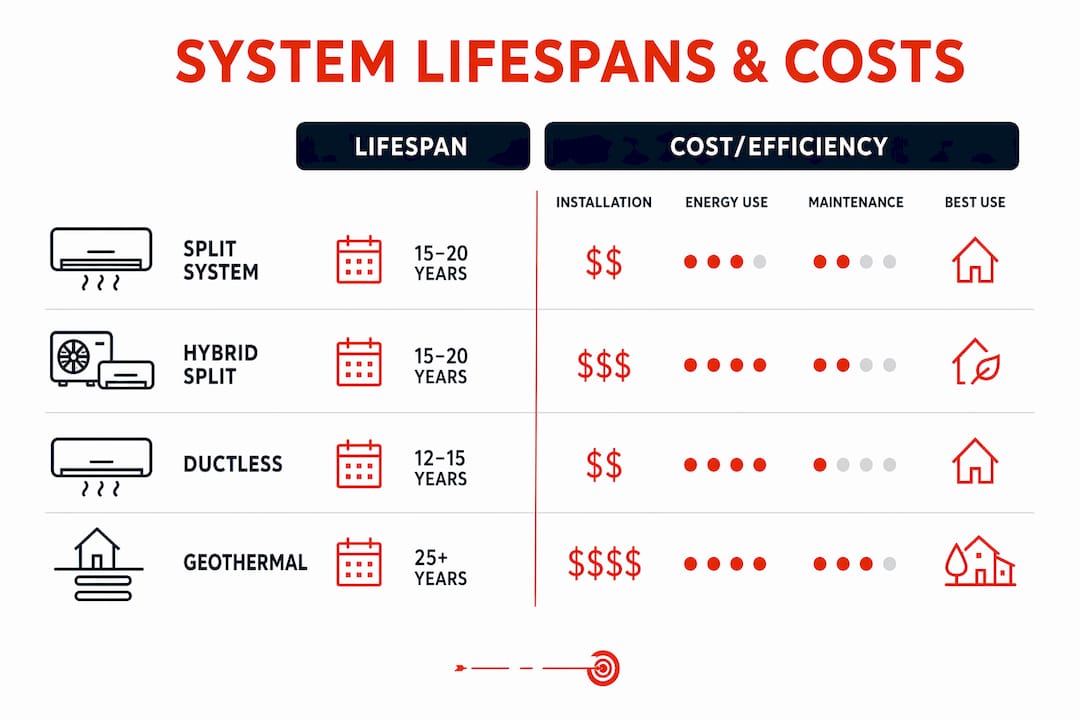
Geothermal and hydronic systems last significantly longer than most alternatives. That longevity helps justify their higher upfront cost when you calculate total cost of ownership over 30 years.
How do heating and cooling systems compare in efficiency and cost?
Heating accounts for about 29% of a home’s utility bill. That makes it the single largest energy expense in most households. Choosing the wrong system type, or running the right system incorrectly, directly inflates that number.
The DOE’s guidance is clear: a whole-house approach combining equipment upgrades with insulation, air sealing, and thermostat management can cut energy bills by about 30%. Equipment alone rarely delivers maximum savings. A high-efficiency furnace installed in a poorly insulated home will still underperform.
When comparing systems, look for the ENERGY STAR label and ask your contractor for energy fact sheets for each model under consideration. These sheets show annual operating costs, efficiency ratings, and estimated savings compared to standard models. They make side-by-side comparisons straightforward.
Pro Tip: Heat pumps use a “set it and forget it” thermostat strategy. Unlike gas furnaces, heat pumps do not benefit from large temperature setbacks during sleep or away periods. Keeping the temperature steady actually improves their efficiency and comfort.
Practical cost and efficiency comparison by system type
| System type | Efficiency rating | Relative install cost | Best use case |
|---|---|---|---|
| Gas furnace | Up to 98% AFUE | Low to moderate | Cold climates with gas access |
| Air-source heat pump | Up to 300%+ COP | Moderate | Mild to moderate climates |
| Geothermal heat pump | Highest available | High | Cold climates, long-term ROI |
| Ductless mini-split | Very high | Moderate | Additions, zoned comfort |
| Electric resistance | 100% conversion | Low | Supplemental or mild climates |
| Packaged system | Moderate | Low to moderate | No basement or attic access |
Air-source heat pumps can deliver more than three units of heat energy for every one unit of electricity consumed. That ratio makes them far more cost-effective than electric resistance heating in most climates.
What system components and control strategies matter most?
A complete HVAC system includes an outdoor unit, an indoor air handler, ductwork, a thermostat, and controls. Each component affects performance. Skipping a component inspection during a quote can lead to surprises after installation.
Key components to verify before any installation or replacement:
- Outdoor unit: houses the compressor and condenser coil. Check for age, refrigerant type, and physical condition.
- Indoor air handler: contains the evaporator coil and blower. Mismatched air handlers reduce system efficiency significantly.
- Ductwork: leaky or undersized ducts waste energy and create uneven temperatures. The DOE estimates duct losses can account for more than 30% of heating and cooling energy in some homes.
- Thermostat: the control brain of the system. Programmable and smart thermostats improve energy management, but only when set up correctly for the system type.
- Controls and zoning: zoned systems use multiple thermostats and dampers to control temperature independently in different areas. This is especially useful in multi-story homes or properties with rooms that heat and cool unevenly.
Thermostat behavior is one of the most misunderstood aspects of switching system types. DOE guidance on thermostat setbacks is specific: conventional systems benefit from lowering the temperature during sleep or when the home is empty, but heat pumps work best at a steady setpoint. Homeowners who switch from a gas furnace to a heat pump installation and keep their old thermostat habits often end up with comfort complaints and higher bills. The fix is simple once you know the rule.
For property managers, getting this component checklist right before signing a service contract prevents scope disputes. A quote that specifies each component by model number leaves no room for misunderstanding.
Key Takeaways
Choosing the right heating and cooling system requires matching heat source, distribution method, and control strategy to your home’s size, climate, and budget.
| Point | Details |
|---|---|
| Separate heat source from distribution | A furnace is a heat source; ducts are distribution. Mixing these categories causes specification errors. |
| System vs. unit distinction matters | An HVAC system covers all components; a unit is one piece. Clarify this before signing any contract. |
| Heating drives 29% of utility bills | Combining equipment upgrades with insulation and air sealing can cut energy bills by about 30%. |
| Heat pump thermostats work differently | Keep heat pump setpoints steady rather than using large temperature setbacks for best efficiency. |
| Lifespan varies widely by type | Geothermal and hydronic systems last 25–50 years; portable units average only 5–10 years. |
What I’ve learned from watching homeowners choose the wrong system
Most homeowners focus entirely on the equipment price and miss the bigger picture. I have seen families install a high-efficiency heat pump in a home with leaky ducts and no insulation upgrades, then wonder why their bills barely changed. The equipment was right. The strategy was incomplete.
The terminology confusion is also real. Homeowners who ask for an “HVAC system” quote and receive a price for just the outdoor unit feel misled, even when the contractor was technically accurate. Knowing the difference between a system and a unit before you call anyone saves frustration and money.
Heat pump types deserve more attention than they get. Air-source models are the right call for most Massachusetts homeowners because of their efficiency in moderate cold. Geothermal systems make sense for long-term owners willing to invest upfront. Water-source systems are rarely the right fit for standard residential properties. Understanding these distinctions before you talk to a contractor puts you in a much stronger position.
The thermostat issue is the one I see cause the most unnecessary service calls. A homeowner switches from a gas furnace to a heat pump, keeps their old programmable thermostat schedule with big overnight setbacks, and calls for repairs within the first winter because the system “can’t keep up.” The system is fine. The control strategy is wrong. Read the DOE guidance on heat pump thermostat behavior before you change anything.
My honest advice: treat your HVAC decision as a whole-home energy project, not a product purchase. Get the insulation and duct assessment done first. Then choose the equipment.
— Warren
How Target Air Systems can help with your HVAC needs
Target Air Systems serves homeowners and property managers across Natick, Framingham, and surrounding Massachusetts communities. The team handles furnace installations and replacements, heat pump services, and full HVAC system upgrades with upfront pricing and no hidden fees. Every technician is screened and certified, and Target Air Systems completes service before payment is required. Whether you are replacing an aging split system, upgrading to a heat pump, or scheduling annual maintenance, you can get a quote directly from the website. Homeowners in the Framingham area can access the full range of installation, maintenance, and repair services from a team with a consistent 5-star track record.
FAQ
What are the main types of heating systems for homes?
The U.S. Department of Energy identifies eight main categories: electric resistance, furnaces and boilers, wood and pellet heating, heat distribution systems, radiant heating, small space heaters, active solar heating, and heat pumps. Each differs in fuel source, efficiency, and installation cost.
What is the difference between an HVAC system and an HVAC unit?
An HVAC system includes all components working together: the outdoor unit, indoor air handler, ductwork, thermostat, and controls. An HVAC unit refers to a single piece of equipment within that system.
Which heating system is the most energy efficient?
Geothermal heat pumps deliver the highest efficiency available for residential use, followed closely by air-source heat pumps. Both move heat rather than generate it, which makes them far more efficient than electric resistance or combustion-based systems.
How long does a typical home HVAC system last?
Lifespan varies by type. Split systems last 15–20 years, geothermal heat pumps last 25–50 years, and portable units average only 5–10 years. Regular maintenance extends the life of any system.
Should I use thermostat setbacks with a heat pump?
No. The DOE advises against large temperature setbacks with heat pumps. Unlike gas furnaces, heat pumps work best at a steady setpoint. Large overnight setbacks reduce efficiency and can cause comfort problems.