


HVAC commissioning is defined as a structured quality assurance process that verifies your heating, ventilation, and air conditioning system is designed, installed, and operating according to the original specifications and your specific performance goals. The industry standard term is “building commissioning,” though most homeowners and property managers know it simply as HVAC commissioning. The Department of Energy confirms commissioning applies to both new and existing systems, making it relevant whether you just installed a new unit or want to get more out of an aging one. Formal commissioning can reduce energy consumption by 13 to 15 percent compared to uncommissioned systems. That is not a minor tune-up benefit. That is a meaningful, measurable improvement in what you pay every month.
What is the HVAC commissioning process and how does it work?
The HVAC commissioning process is a continuous quality assurance process that starts early in the design phase and runs through occupancy. It is not a single inspection at the end of installation. Most homeowners confuse commissioning with a standard startup check. A startup means a technician powers on the system and confirms it runs. Commissioning means a technician systematically verifies every component performs to a documented standard under real operating conditions.
Two key documents anchor the entire process. The Owner’s Project Requirements (OPR) defines what the system must achieve, including comfort targets, energy goals, and indoor air quality standards. The Basis of Design (BoD) defines how the system will meet those requirements through specific equipment choices and design decisions. When these two documents align, commissioning has a clear target to verify against.
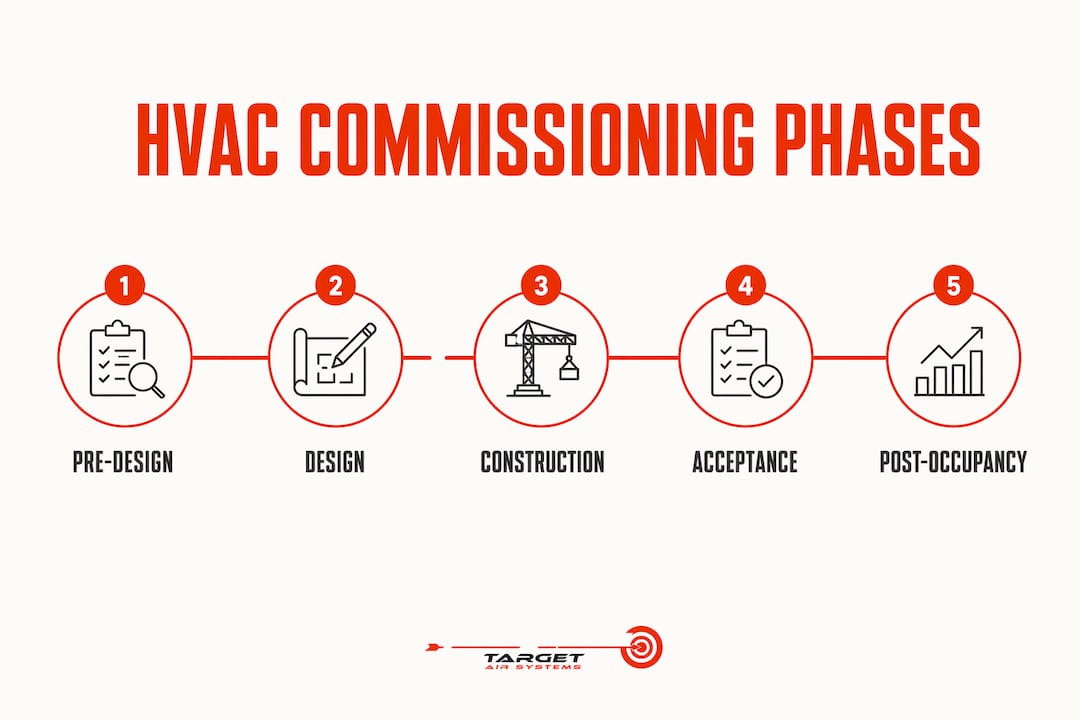
The HVAC commissioning process is structured into five phases: Pre-Design, Design, Construction, Acceptance, and Post-Occupancy. Each phase has specific tasks and goals. The table below summarizes what happens at each stage.
| Phase | Key Tasks | Goal |
|---|---|---|
| Pre-Design | Establish OPR, define comfort and efficiency goals | Set measurable targets before design begins |
| Design | Review drawings, verify BoD aligns with OPR | Catch design errors before construction |
| Construction | Inspect installation, verify equipment placement | Confirm work matches approved design |
| Acceptance | Functional performance testing, measurements | Verify system operates as designed |
| Post-Occupancy | System manual delivery, warranty review, training | Sustain performance after move-in |
The Post-Occupancy phase typically occurs around 10 months after occupancy. That timing matters because it catches seasonal performance issues that would not show up in an initial walkthrough.
Pro Tip: Ask your HVAC contractor for copies of both the OPR and BoD documents before work begins. If they cannot produce them, that is a signal the commissioning process is not being followed properly.
How does commissioning improve system performance and energy efficiency?
Commissioning improves performance by finding and fixing problems that standard installation checks miss. A system can appear to run correctly while wasting significant energy due to duct restrictions, incorrect refrigerant charge, or miscalibrated controls. Each of these faults quietly drives up your utility bills without triggering an obvious breakdown.
The energy savings are well documented. Projects in schools and commercial buildings have shown a 1 to 3 year payback from commissioning energy savings and fault correction alone. For a property manager overseeing multiple units, that payback timeline makes commissioning one of the highest-return maintenance investments available.
Commissioning also directly improves indoor air quality and thermal comfort. The Department of Energy notes that existing buildings benefit significantly from commissioning because faulty equipment and incorrect operational settings often go undetected for years. A system running with a blocked return air path, for example, will struggle to maintain even temperatures and will cycle more frequently, wearing out components faster.
Common issues that commissioning detects include:
- Duct leaks that reduce delivered airflow to occupied spaces
- Incorrect refrigerant charge causing reduced cooling capacity and compressor strain
- Improperly calibrated thermostats or sensors reading temperatures inaccurately
- Clogged or undersized filters creating excessive static pressure
- Controls wired incorrectly, causing equipment to run in the wrong sequence
- Dampers stuck in the wrong position, unbalancing airflow between rooms
Each of these problems has a direct cost. Left uncorrected, they shorten equipment life, raise energy bills, and reduce comfort. Commissioning catches them before they become expensive repairs. For homeowners dealing with repeat HVAC breakdowns, an undetected fault from the original installation is often the root cause.
What specific tests are performed during HVAC commissioning?
Functional performance testing is the technical core of the commissioning process. Technicians simulate real operating conditions, including peak heating and cooling loads, to verify the system responds correctly. Functional performance testing is specifically designed to uncover latent defects that standard startup inspections miss, including improperly wired controls and incorrectly set operational sequences.
One of the most telling measurements is Total External Static Pressure (TESP). Technicians measure TESP by adding the pressure readings from the supply and return sides of the air handler. Exceeding 0.5 inches water column indicates duct or filter restrictions that need correction. A system running above that threshold is working harder than it should, which reduces efficiency and accelerates wear on the blower motor.
The numbered list below covers the key verification tasks performed during a thorough commissioning inspection:
- Airflow measurement at each supply and return register to confirm balanced distribution throughout the home
- Total External Static Pressure (TESP) testing to identify duct restrictions or filter blockages
- Refrigerant charge verification using superheat and subcooling measurements to confirm correct charge level
- Temperature differential testing across the coil to verify heat transfer is occurring at the designed rate
- Nitrogen pressure testing of brazed refrigerant lines to check for leaks before charging the system
- Vacuum evacuation to 500 microns to remove moisture from the refrigerant circuit, protecting the compressor
- Controls and sequence of operations testing to confirm thermostats, sensors, and safety switches respond correctly
- Documentation review including written reports, measurement data, and photos for warranty and future reference
Commissioning documentation includes written reports, measurement data, photos, and lists of corrective actions. This paperwork protects you. If a warranty dispute arises or a comfort complaint surfaces later, the commissioning report provides a clear baseline of how the system performed when it was new.
Pro Tip: Request a copy of the commissioning report and keep it with your home records. If you sell the property, this document adds credibility to your HVAC system’s condition and maintenance history.
For homeowners who want to understand what their technician should be checking, a solid HVAC maintenance checklist covers many of the same measurement points that commissioning verifies annually.
How can you use commissioning results to maintain long-term efficiency?
A commissioning report is only useful if you act on it. The report will typically list findings in two categories: items corrected during the commissioning visit and deferred items that need follow-up. Deferred items are not optional. They represent known faults that will worsen over time and cost more to fix later.
The Post-Occupancy phase of commissioning includes system training, which means your technician should walk you through how the system operates, what the controls do, and what normal performance looks like. This knowledge helps you recognize when something changes. A sudden increase in runtime, unusual noises, or uneven temperatures are all signs that a previously documented issue may have progressed.
Use the commissioning report to build your ongoing maintenance plan. Key actions include:
- Schedule follow-up repairs for any deferred items within 30 days of receiving the report
- Use the baseline airflow and static pressure measurements to compare against future readings
- Share the report with any new HVAC technician who services the system so they understand its history
- Reference the OPR document when evaluating whether the system is still meeting your comfort and efficiency goals
- Flag any recurring issues that match problems identified in the original commissioning report
Property managers overseeing multiple units benefit most from treating commissioning reports as living documents. A system that passed commissioning three years ago but now shows rising energy costs likely has a developing fault. Comparing current performance against the commissioning baseline makes that diagnosis faster and more accurate. Understanding what causes premature HVAC failure often starts with reviewing what the commissioning report flagged but was never addressed.
Key Takeaways
HVAC commissioning is the only systematic process that verifies your system meets its design targets, catches hidden faults, and documents baseline performance for long-term maintenance decisions.
| Point | Details |
|---|---|
| Commissioning is not a startup check | It is a multi-phase, documented process covering design through post-occupancy. |
| Energy savings are measurable | Commissioning reduces energy use by 13–15 percent with a 1–3 year payback on corrections. |
| TESP is a key diagnostic metric | Static pressure above 0.5 in. w.c. signals duct or filter restrictions that hurt efficiency. |
| Documentation protects your investment | Written reports and photos support warranty claims and future troubleshooting. |
| Post-occupancy review matters | A follow-up at 10 months catches seasonal faults that initial testing cannot reveal. |
Why I think most homeowners undervalue commissioning
Most homeowners I talk to have never heard the word “commissioning” until something goes wrong. By then, the system has been running with a correctable fault for months or years. The energy waste has already happened. The wear on the compressor has already accumulated.
The biggest misconception I see is treating commissioning as a luxury for large commercial buildings. ASHRAE Guideline 0-2019 does recommend an independent Commissioning Authority for projects above 50,000 square feet, but the underlying principles apply to any system. A residential unit that was never properly commissioned is just a commercial problem at a smaller scale.
What I find most frustrating is how often the commissioning step gets skipped because it adds time to the installation schedule. Contractors under pressure to finish quickly will power on the system, confirm it blows air, and call it done. That is not commissioning. That is a startup. The difference shows up in your energy bills and in how long the equipment lasts.
My recommendation: before any new HVAC installation or major replacement, ask the contractor specifically which commissioning phases they follow and what documentation they provide. If the answer is vague, push harder or find someone who takes the process seriously. Commissioning is not an add-on. It is the proof that you got what you paid for.
— Warren
How Target Air Systems handles HVAC commissioning for homeowners
Target Air Systems brings certified technicians to every installation and service call, following a documented process that goes well beyond a basic startup check. The team measures airflow, verifies static pressure, checks refrigerant charge, and tests controls before considering a job complete. No payment is required until the work is done to your satisfaction. For homeowners and property managers in the Natick, MA area, that commitment to verified performance is what separates a reliable installation from one that costs you more over time. Whether you need a new AC installation with full commissioning or a furnace tune-up that checks the same key metrics, Target Air Systems delivers upfront pricing and documented results. Request a quote to schedule your service.
FAQ
What is HVAC commissioning in simple terms?
HVAC commissioning is a documented process that verifies your heating and cooling system is installed correctly and performs to its design specifications. It covers everything from design review through post-occupancy testing, not just a power-on check.
How long does the HVAC commissioning process take?
The full process spans the project lifecycle, from pre-design through a post-occupancy review at approximately 10 months after occupancy. The on-site acceptance testing phase for a residential system typically takes several hours to a full day.
Does commissioning apply to existing HVAC systems?
Yes. The Department of Energy confirms that commissioning is effective for existing buildings and often uncovers faulty equipment and incorrect settings that have been wasting energy for years.
What is the difference between commissioning and a startup?
A startup confirms the system powers on and runs. Commissioning is a systematic, documented process that verifies performance under real operating conditions, including airflow, static pressure, refrigerant charge, and controls sequencing.
Why is HVAC commissioning important for energy efficiency?
Commissioning identifies and corrects faults that cause energy waste, such as duct restrictions, incorrect refrigerant charge, and miscalibrated controls. Properly commissioned systems use 13 to 15 percent less energy than uncommissioned systems.