


Repeat HVAC breakdowns are defined as recurring system failures that return after repairs because the underlying cause was never fixed. Natick homeowners face this pattern more often than they realize, and what causes repeat HVAC breakdowns in Natick almost always traces back to a handful of root problems: poor airflow, dirty coils, electrical stress, thermostat faults, and skipped maintenance. Treating symptoms without diagnosing the source is what keeps the same technician coming back. Understanding the real drivers behind recurrent HVAC problems is the first step toward a system that actually stays fixed.
What causes repeat HVAC breakdowns in Natick homes?
Poor airflow is the most common root cause of recurring HVAC failures. When air cannot move freely through the system, every other component works harder than it should. That extra strain shows up as frozen coils, blower motor burnout, and compressor overload, all of which look like separate problems but share one source.
Duct issues are the main airflow culprit in Natick homes. Leaking ducts lose conditioned air before it reaches living spaces, forcing the system to run longer cycles. Blockages from debris, collapsed flex duct, or closed dampers create static pressure spikes that stress the blower. Poorly designed return air grilles, a common issue in older Natick construction, starve the system of the air volume it needs to operate within design limits.
The consequences of airflow problems compound quickly:
- Frozen evaporator coils from insufficient warm air passing over the coil surface
- Blower motor overheating from running at maximum speed against high resistance
- Electrical component wear from sustained high-amperage draw
- Weak cooling or heating at registers despite the system running constantly
- Ductwork that pops and bangs under vacuum pressure from a struggling blower
Pro Tip: Have a technician measure static pressure at the air handler. A reading above 0.5 inches of water column on a standard residential system signals a duct or airflow problem that will keep causing breakdowns until it is corrected.
How dirty coils and clogged filters drive ongoing HVAC issues
Dirty evaporator and condenser coils reduce heat transfer efficiency and force the compressor to work harder to achieve the same output. The evaporator coil absorbs heat from indoor air. The condenser coil releases that heat outside. When either surface is coated in dust, pollen, or grime, the heat exchange slows down and the system runs longer, hotter, and under greater mechanical stress.
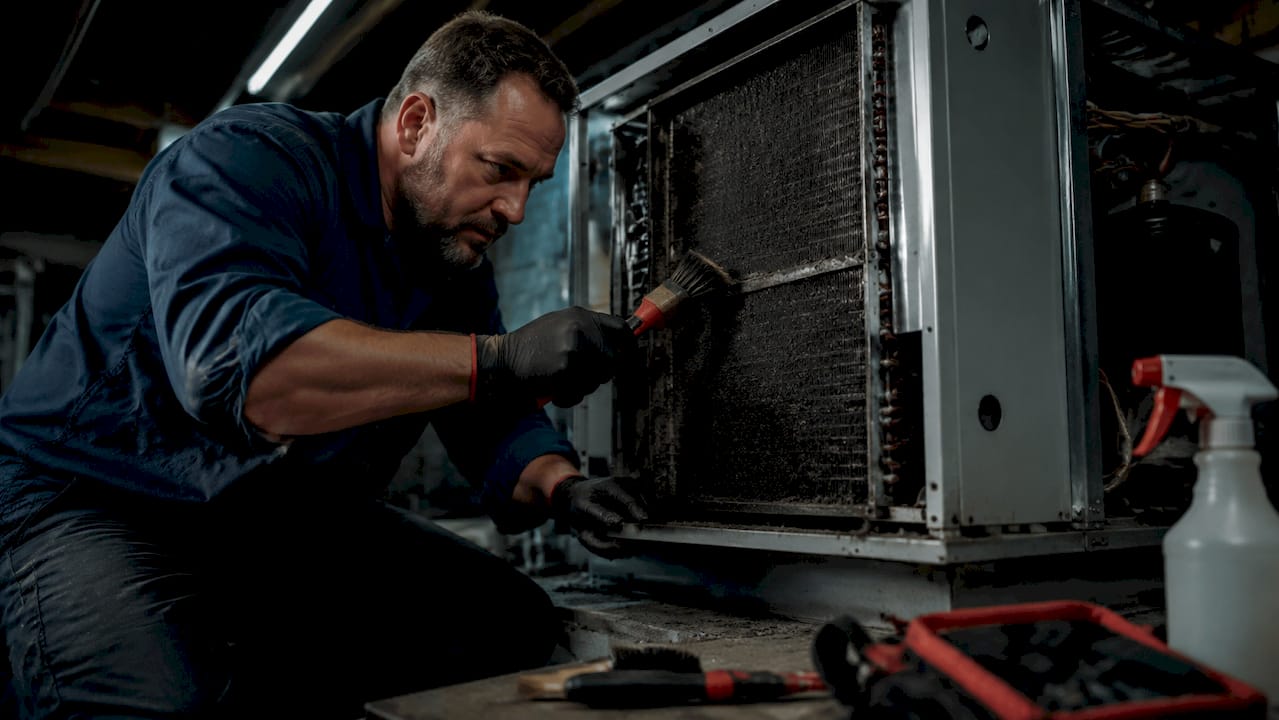
Clogged filters make this worse. A blocked filter creates a vacuum pressure imbalance that restricts airflow to the evaporator coil, which then freezes over. A frozen coil cannot absorb heat, so the system shuts down on a safety switch. The homeowner calls for service, the technician thaws the coil, and the cycle repeats because the filter was never addressed properly.
A practical maintenance checklist for coils and filters:
- Replace or clean filters every 30–90 days depending on household dust levels and pet dander
- Use a MERV filter rated for your specific system. Filters that are too restrictive increase blower vacuum and cause duct noise
- Schedule professional evaporator coil cleaning at least once per year
- Clear debris from the outdoor condenser unit monthly during cooling season
- Check condenser fins for bending or blockage after storms
Pro Tip: A correctly rated MERV filter matters more than a high-rated one. A MERV 13 filter in a system designed for MERV 8 restricts airflow enough to cause the same freeze-up problems as a dirty coil.
Do electrical faults and thermostat errors cause frequent HVAC breakdowns?
Electrical problems including faulty wiring, corroded contacts, and failed capacitors are a leading cause of repeated HVAC failures that homeowners often misread as mechanical issues. A capacitor that is weakening will allow the compressor or fan motor to start but not sustain operation. The system shuts off, the homeowner resets it, and it runs briefly before failing again. Without testing the capacitor under load, a technician replacing only the obvious failed part misses the underlying electrical stress.
Thermostat malfunctions cause a different but equally frustrating pattern. A failing thermostat sends erroneous signals that trigger short cycling, where the system starts and stops repeatedly in short intervals. Short cycling prevents the system from completing a full conditioning cycle, which wastes energy, stresses the compressor, and accelerates wear on contactors and relays.
Common electrical and control system warning signs include:
- The system starts but shuts off within a few minutes repeatedly
- Breakers trip after the unit runs briefly
- The thermostat display reads a temperature that does not match the room
- The outdoor unit hums but the fan does not spin
- Service calls fix the problem temporarily but the same fault returns within weeks
Professional electrical diagnosis goes beyond replacing the part that failed. Technicians should test motor amperage before swapping capacitors, check wiring connections for corrosion, and verify thermostat calibration and signal accuracy. Skipping these steps is why many repeat service calls address symptoms rather than the actual fault.
Why skipping maintenance is the top reason for recurrent HVAC problems
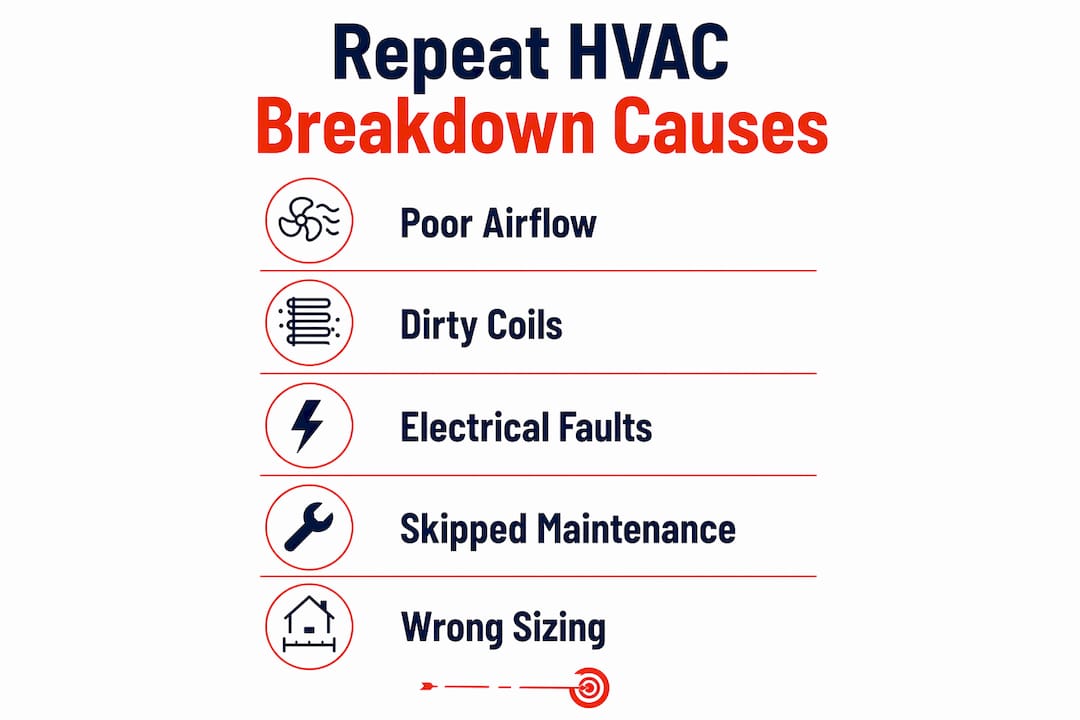
Lack of routine maintenance is the number one reason HVAC systems break down repeatedly and lose years of useful life. A system that runs without regular service accumulates problems slowly. Filters get dirtier, coils lose efficiency, electrical connections loosen, and refrigerant levels drift. None of these changes are dramatic on their own, but together they push the system toward failure.
A complete annual maintenance visit for a Natick home should cover:
- Replace or inspect air filters and confirm the MERV rating matches system specs
- Clean evaporator and condenser coils to restore heat transfer efficiency
- Inspect and tighten all electrical connections and test capacitor ratings
- Check refrigerant charge and test for leaks before adding refrigerant
- Measure static pressure and airflow at key points in the duct system
- Lubricate moving parts in the blower and motor assembly
- Test thermostat calibration and verify control signals are accurate
- Inspect the condensate drain line and clear any blockages
Adding refrigerant without first performing leak detection is one of the most common maintenance shortcuts that causes rapid repeat failures. The refrigerant simply escapes again through the same leak, and the system underperforms within weeks.
Pro Tip: Schedule AC maintenance in the spring before cooling season and furnace service in the fall before heating season. Catching problems before peak demand prevents the emergency calls that cost more and take longer to resolve.
Homeowners who treat HVAC service as a reactive expense rather than a scheduled cost consistently pay more over time. A single annual maintenance visit costs a fraction of one emergency repair, and it prevents the compressor failures and blower burnouts that require major component replacement.
When repeat breakdowns signal it is time to replace, not repair
Frequent repairs on aging equipment, multiple small failures, and improper system sizing are clear signals that continued repairs will cost more than a replacement. Natick homeowners sometimes spend thousands on a system that is simply too old or too small for the home it serves.
| Factor | Repair makes sense | Replacement makes sense |
|---|---|---|
| System age | Under 10 years | Over 15 years |
| Repair cost | Less than 30% of replacement cost | More than 50% of replacement cost |
| System sizing | Correctly sized for the home | Undersized or oversized for current load |
| Failure pattern | Single isolated fault | Multiple components failing in sequence |
| Energy bills | Stable or improving | Rising despite repairs |
An undersized system runs constantly without reaching the set temperature. An oversized system short cycles, which causes the same compressor stress as a thermostat fault. Neither problem is solved by repairing individual components. Proper sizing, calculated using Manual J load calculations, is the only fix. Homeowners dealing with premature HVAC failure patterns should ask their technician to verify that the installed equipment matches the home’s actual heating and cooling load.
Key takeaways
Repeat HVAC breakdowns in Natick homes are caused by untreated root problems, and fixing symptoms without diagnosing the source guarantees the same failure will return.
| Point | Details |
|---|---|
| Airflow is the primary driver | Duct leaks, blockages, and poor return design cause most recurring HVAC failures. |
| Coil and filter neglect compounds problems | Dirty coils and wrong-rated filters trigger freeze-ups and compressor stress that repeat until cleaned. |
| Electrical faults need full diagnosis | Capacitors, wiring, and thermostat calibration must all be tested, not just the part that visibly failed. |
| Maintenance prevents most breakdowns | Annual filter changes, coil cleaning, and electrical checks stop the majority of recurring issues before they start. |
| Aging or mismatched systems need replacement | Continuing to repair undersized or outdated equipment costs more than a properly sized replacement over time. |
What I have learned about repeat HVAC breakdowns after years in the field
The most frustrating pattern I see is homeowners who have called three different technicians in one season and gotten three different “fixes,” none of which lasted. The system is not unlucky. The diagnosis was incomplete each time.
Quick fixes fail long term because they ignore deeper issues like duct leaks or poor airflow. I have seen frozen coils thawed and recharged with refrigerant four times in a single summer because nobody checked for the leak that was draining the charge every two weeks. The repair looked successful for about 10 days each time.
My honest advice: if your system has broken down more than twice in 12 months, stop authorizing individual repairs until a technician performs a full system diagnostic. That means static pressure testing, electrical load testing, coil inspection, and a refrigerant leak check. A technician who skips those steps and goes straight to replacing the obvious failed part is not solving your problem.
Homeowners also underestimate noisy ductwork as a warning sign. Popping and banging sounds in the ducts are not normal aging. They signal static pressure imbalances from dirty filters or undersized returns, and those imbalances are actively damaging your blower motor every time the system runs. Treat the noise as an early warning, not background noise to ignore.
The homeowners who stop the breakdown cycle are the ones who commit to annual maintenance and insist on root-cause diagnosis. Everything else is just buying time.
— Warren
Target Air Systems: fixing repeat HVAC problems in Natick for good
Target Air Systems serves Natick homeowners who are tired of calling for the same repair twice. The team of screened, certified technicians performs full system diagnostics before recommending any repair, which means the root cause gets addressed, not just the visible symptom. Services include AC repair, heat pump maintenance, and complete system replacements with upfront pricing and no hidden fees. Target Air Systems guarantees service completion before payment is required. If your Natick home has seen more than one breakdown this season, request a quote and get a technician who will find the real problem.
FAQ
What is the most common cause of repeat HVAC breakdowns?
Poor airflow from duct leaks, blockages, or undersized return grilles is the most common root cause. It creates a chain reaction of frozen coils, blower strain, and electrical wear that produces repeated failures.
Why does my HVAC keep breaking down after being repaired?
Repairs that address only the visible fault, such as a frozen coil or tripped breaker, without diagnosing the underlying cause will result in the same failure returning. A full diagnostic including airflow, electrical, and refrigerant checks is required to stop the cycle.
How often should Natick homeowners schedule HVAC maintenance?
Twice per year is the standard: once in spring before cooling season and once in fall before heating season. This schedule catches developing problems before they cause emergency breakdowns.
Can a noisy HVAC system in a Natick home signal a serious problem?
Popping or banging ductwork signals static pressure imbalances caused by dirty filters or undersized returns. Left unaddressed, these imbalances damage the blower motor over time.
When should I replace my HVAC system instead of repairing it again?
Replacement is the better choice when the system is over 15 years old, repair costs exceed 50% of replacement cost, or multiple components are failing in sequence. An improperly sized system also warrants replacement rather than continued repairs.