


HVAC repair warranties are legally binding guarantees that cover the cost of parts, labor, or both when a heating or cooling system fails. For Natick homeowners, these warranties are the difference between a manageable repair bill and a financial shock that can run well past $2,000. Understanding warranty protection for HVAC systems means knowing what each coverage type includes, what voids it, and how to keep it active year after year. This guide breaks down every layer of coverage so you can protect your investment before something breaks.
Why HVAC repair warranties matter in Natick
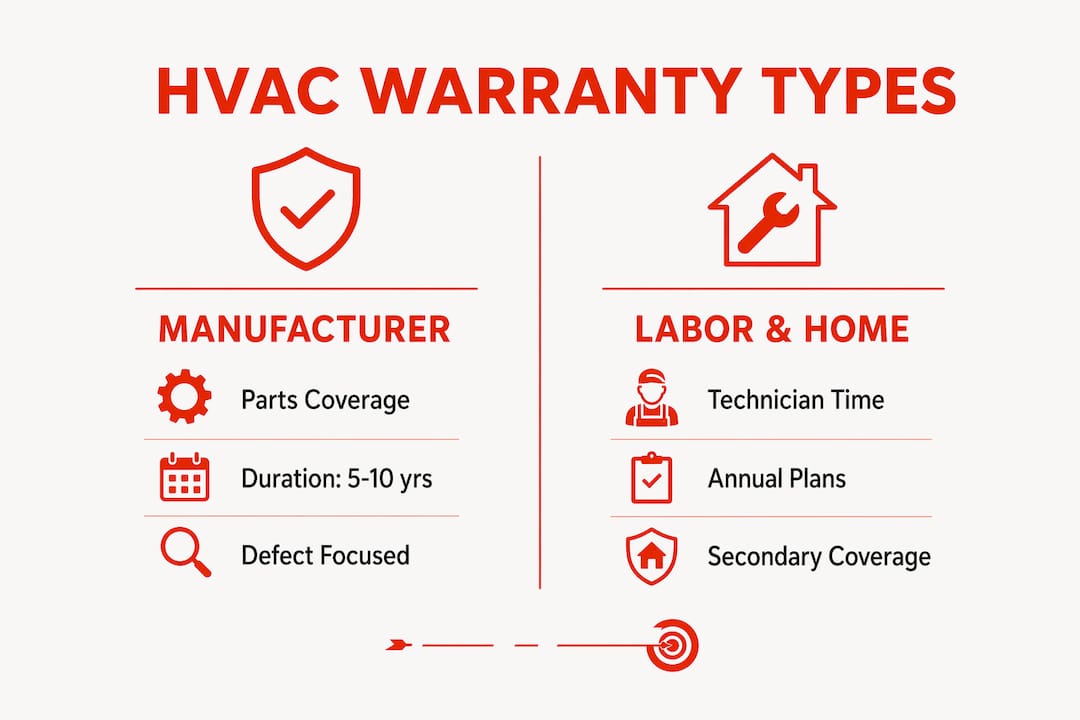
HVAC warranty coverage falls into three distinct categories, and most homeowners only know about one of them. Manufacturer parts warranties, labor warranties, and home warranty plans each serve a different purpose. Treating them as interchangeable is the most common and costly mistake Natick homeowners make.
Manufacturer parts warranties
A manufacturer parts warranty covers defective components from brands like Carrier, Trane, or Lennox for a set number of years, typically five to ten. The catch is significant. Standard manufacturer warranties exclude labor, refrigerant, and diagnostic charges entirely. That means a covered part replacement can still cost you $300–$800 in service fees out of pocket.

Labor warranties
Labor warranties are issued by the installing contractor, not the manufacturer. They cover the technician’s time when a repair is needed. Labor warranties are critical because manufacturer warranties rarely cover labor, leaving homeowners exposed to significant fees on every service visit. A contractor who offers a five to ten year labor warranty is signaling real confidence in the quality of their installation work.
Home warranty plans
Home warranty plans are annual renewable contracts that cover multiple home systems, including HVAC. They sit on top of manufacturer and labor warranties as a secondary layer of protection. The table below shows how these three coverage types compare side by side.
| Coverage type | What it covers | Common exclusions |
|---|---|---|
| Manufacturer parts warranty | Defective parts from the original factory | Labor, refrigerant, diagnostic fees |
| Labor warranty (contractor) | Technician time for covered repairs | Parts, refrigerant, pre-existing issues |
| Home warranty plan | Repairs from normal wear and tear | Pre-existing conditions, payout caps |
Pro Tip: Ask your contractor for the labor warranty in writing before any installation begins. A verbal promise is not enforceable.
How repair costs in Natick show the real value of warranty coverage
The financial stakes of HVAC repairs are high enough that warranty protection pays for itself quickly. Minor HVAC repairs typically run $130–$450, while major component replacements like compressors cost $1,500–$2,800 for parts alone, before labor is added. For Natick homeowners dealing with cold Massachusetts winters and humid summers, a system failure is not a seasonal inconvenience. It is an urgent, expensive problem.
Labor fees compound the total cost fast. Service visit fees range from $300–$800 per visit, even when the part itself is covered under a manufacturer warranty. A single compressor replacement without labor coverage could cost a homeowner over $3,500 total. With a labor warranty in place, that same repair costs nothing beyond the covered part.
The table below illustrates what Natick homeowners can expect to pay with and without warranty coverage for common repairs.
| Repair type | Cost without warranty | Cost with parts + labor warranty |
|---|---|---|
| Minor repair (capacitor, sensor) | $130–$450 | $0 |
| Major part replacement (compressor) | $1,500–$2,800 parts + $300–$800 labor | $0 |
| Diagnostic service visit | $300–$800 | Varies by contract |
The numbers make the case clearly. A homeowner who skips warranty coverage on a compressor replacement pays more in a single repair than most warranty plans cost over several years. Reviewing your repair vs. replacement options before a breakdown happens puts you in a much stronger financial position.
Pro Tip: Keep a dedicated folder, physical or digital, with every HVAC invoice and service record. This documentation is your first line of defense if a warranty claim is ever disputed.
What conditions keep your HVAC warranty valid?
Warranty coverage does not stay active automatically. Natick homeowners must take specific steps after installation and throughout the life of the system to avoid a denied claim.
The registration window is the first critical deadline. Manufacturers require system registration within 60–90 days of installation to qualify for full warranty coverage. Missing that window can cut your coverage term significantly, sometimes in half. Most homeowners do not realize this until they file a claim years later and discover their coverage was reduced from the start.
Annual documented maintenance is the second requirement. Missing maintenance records can result in claim denial even when the defect is genuine. Manufacturers treat maintenance records as proof that the system was cared for properly. No records means no claim, regardless of what failed or why.
The installer’s credentials matter just as much. Using an unlicensed installer almost always voids the manufacturer warranty, regardless of how well the installation was done. Certified technicians from companies like Target Air Systems protect your warranty from day one.
Key maintenance tasks that keep warranties active include:
- Replacing air filters every one to three months
- Scheduling annual professional tune-ups with documented service records
- Keeping outdoor condenser units clear of debris and vegetation
- Checking refrigerant levels and electrical connections each season
- Registering the system with the manufacturer within 90 days of installation
Skipping proper maintenance voids warranties and increases the risk of breakdowns. Maintenance serves a dual role: it keeps the system running efficiently and it keeps your warranty protection intact. A full HVAC maintenance checklist helps Natick homeowners stay on schedule throughout the year.
How do home warranties differ from manufacturer warranties?
Home warranties and manufacturer warranties protect against different problems, and confusing the two leads to gaps in coverage. A manufacturer warranty covers factory defects. A home warranty covers failures from normal wear and tear over time. Both are useful, but neither replaces the other.
Home warranties often cap HVAC repair payouts at $1,500 per contract term and exclude pre-existing conditions. That cap can fall well short of a major repair bill. A compressor replacement alone can exceed that limit before labor is even counted.
Home warranties are renewable annual contracts that cover multiple home systems. They work best as a safety net layered on top of manufacturer and labor warranties, not as a standalone solution. Reading the exclusions section of any home warranty contract before signing is non-negotiable.
Watch for these common home warranty exclusions:
- Pre-existing conditions at the time of contract start
- Failures caused by improper installation or lack of maintenance
- Repairs that exceed the per-term payout cap
- Specific components listed as excluded in the fine print
The strongest protection comes from combining all three coverage types: a manufacturer parts warranty, a contractor labor warranty, and a home warranty plan. Each one fills gaps the others leave open. Understanding common causes of premature HVAC failure helps Natick homeowners avoid the situations that trigger denied claims in the first place.
Key Takeaways
HVAC repair warranties protect Natick homeowners from repair costs that routinely exceed $2,000 when parts, labor, and diagnostic fees combine without coverage in place.
| Point | Details |
|---|---|
| Three coverage types exist | Manufacturer, labor, and home warranties each cover different costs and risks. |
| Labor costs are often uncovered | Service visit fees run $300–$800 even when parts are covered under a manufacturer warranty. |
| Registration deadline is critical | Register your system within 60–90 days of installation to secure full warranty terms. |
| Maintenance records protect claims | Documented annual maintenance prevents claim denial for genuine defects. |
| Combine all three warranty types | Layering manufacturer, labor, and home warranties closes the most common coverage gaps. |
What I’ve learned about HVAC warranties after years in the field
Most homeowners I talk to think they have full coverage because they got a warranty at installation. The reality is almost always more complicated. The manufacturer warranty covers parts. The labor warranty, if the contractor offered one at all, covers the technician’s time. The home warranty plan covers wear and tear up to a cap that may not stretch far enough. Each layer matters, and each one has conditions attached.
The single biggest mistake I see is homeowners skipping the registration step. A system installed in january and registered in may is already outside the 90-day window for most manufacturers. That homeowner just lost years of coverage without knowing it. The second biggest mistake is assuming annual maintenance is optional. It is not. It is a warranty requirement, and missing it gives the manufacturer a legitimate reason to deny your claim.
My honest advice: before you sign any installation contract, ask the contractor three questions. What labor warranty do you offer, and for how long? Are you a licensed and certified installer for this equipment brand? What documentation do I need to keep my warranty active? A contractor who cannot answer all three clearly is not the right contractor for the job. A long labor warranty, five years or more, is one of the clearest signals that an installer stands behind their work.
Natick homeowners deal with real seasonal extremes. A system failure in february or august is not just uncomfortable. It is a health and safety issue. Warranty coverage is not a luxury. It is the financial foundation that makes reliable home comfort possible.
— Warren
Target Air Systems: warranty-backed HVAC service in Natick
Target Air Systems serves Natick homeowners with certified technicians, upfront pricing, and no payment required until the job is complete. Every installation comes with clear documentation of parts and labor coverage so you know exactly what your warranty includes from day one. The team handles everything from routine AC maintenance and tune-ups that keep your warranty active to full system installations with manufacturer-backed parts coverage. For homeowners who want warranty-protected service from a team with a proven local track record, Natick HVAC services from Target Air Systems are a reliable starting point. Request a free quote and get clear answers on coverage before any work begins.
FAQ
What does an HVAC repair warranty typically cover?
An HVAC repair warranty covers either defective parts, technician labor, or both, depending on the warranty type. Manufacturer warranties cover parts only, while labor warranties from the installing contractor cover service time.
Can I lose my HVAC warranty if I skip annual maintenance?
Yes. Missing documented annual maintenance gives manufacturers grounds to deny claims, even for genuine defects. Keep service records from every professional tune-up to protect your coverage.
How long do HVAC warranties usually last in Natick?
Manufacturer parts warranties typically run five to ten years. Labor warranties from contractors vary widely, but a five to ten year labor warranty signals strong installer confidence.
Does a home warranty replace my manufacturer HVAC warranty?
No. A home warranty is a secondary layer of coverage that handles wear-and-tear failures, often with a payout cap of $1,500 per term. It complements but does not replace a manufacturer or labor warranty.
What voids an HVAC warranty?
Using an unlicensed installer, missing the registration window within 60–90 days of installation, and skipping documented annual maintenance are the most common reasons manufacturers void HVAC warranty coverage.