


Frequent commercial HVAC repairs are defined by a repeating cycle of breakdowns driven by four root causes: clogged airflow paths, refrigerant leaks, thermostat faults, and system undersizing. Facility managers who understand these causes stop treating symptoms and start fixing the actual problem. HVAC failures develop gradually over weeks or months from small, neglected performance issues before a full breakdown occurs. The result is predictable: rising energy bills, unplanned downtime, and repair invoices that compound every quarter. This guide breaks down each cause and tells you exactly what to look for.
What causes frequent commercial HVAC repairs: airflow problems
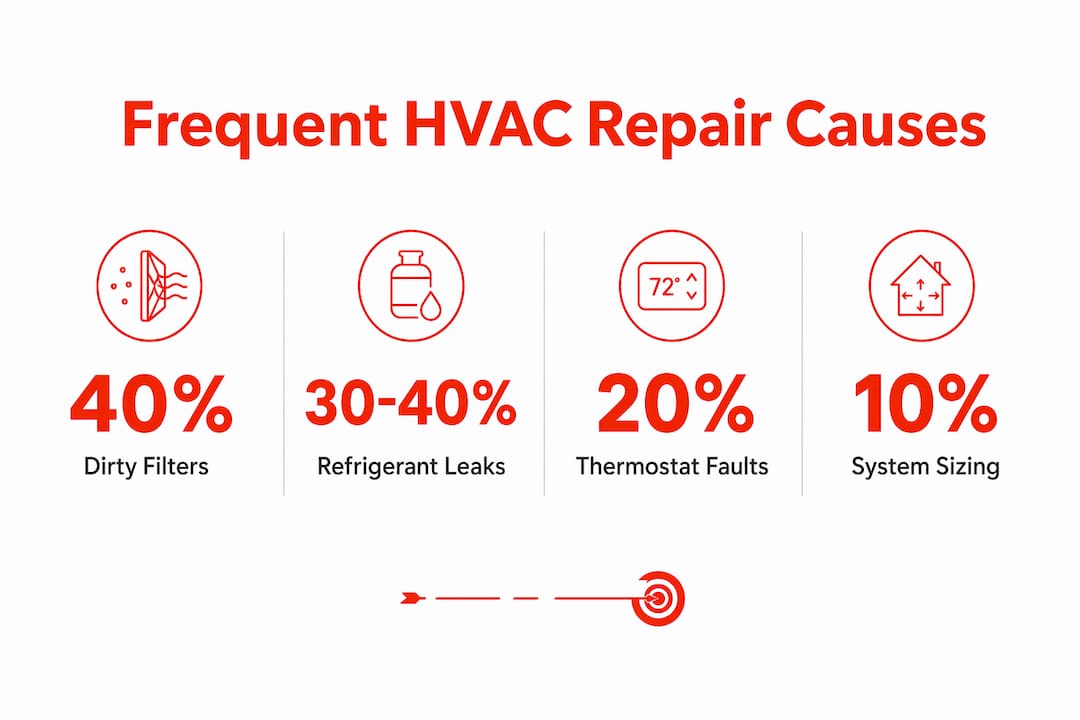
Airflow restrictions are the single most common driver of repeated HVAC system failure causes in commercial buildings. Dirty or clogged air filters account for 40% of commercial HVAC maintenance visits and increase energy costs by 5–15%. That means nearly half of all service calls you place could be prevented with a consistent filter replacement schedule.
The damage from restricted airflow goes beyond higher utility bills. Clogged filters cause coil freezing, blower motor strain, and repeated safety lockouts in commercial systems. Each lockout forces a manual reset, adds wear to electrical components, and shortens the life of the compressor. A frozen evaporator coil, left unaddressed, can crack and require a full coil replacement costing thousands of dollars.
Blocked ducts and poor vent placement compound the problem. When supply and return vents are obstructed by furniture, shelving, or renovation work, static pressure inside the ductwork rises. The blower motor works harder to move the same volume of air, generating excess heat and accelerating bearing wear. Fan motor malfunctions follow directly from this kind of sustained overload.
- Filter checks: Replace or inspect commercial filters every 30–60 days, not on a quarterly schedule.
- Duct inspections: Walk the building annually and confirm all supply and return vents are unobstructed.
- Fan motor monitoring: Listen for unusual noise from air handlers. Grinding or squealing indicates bearing failure before the motor quits entirely.
- Static pressure testing: Ask your technician to measure duct static pressure during every maintenance visit.
Pro Tip: Set a recurring calendar reminder tied to your building’s occupancy cycle. High-traffic commercial spaces like gyms, restaurants, and medical offices load filters two to three times faster than standard office buildings.
How do refrigerant leaks cause repeated HVAC failures?
Refrigerant leaks are the second most destructive factor in commercial HVAC problems. Refrigerant leaks reduce cooling capacity by 30–40% and nearly double electricity consumption. Repair costs range from $200 to $1,500 depending on leak location and refrigerant type. That cost range does not include the compressor replacement that follows if the leak goes unaddressed.
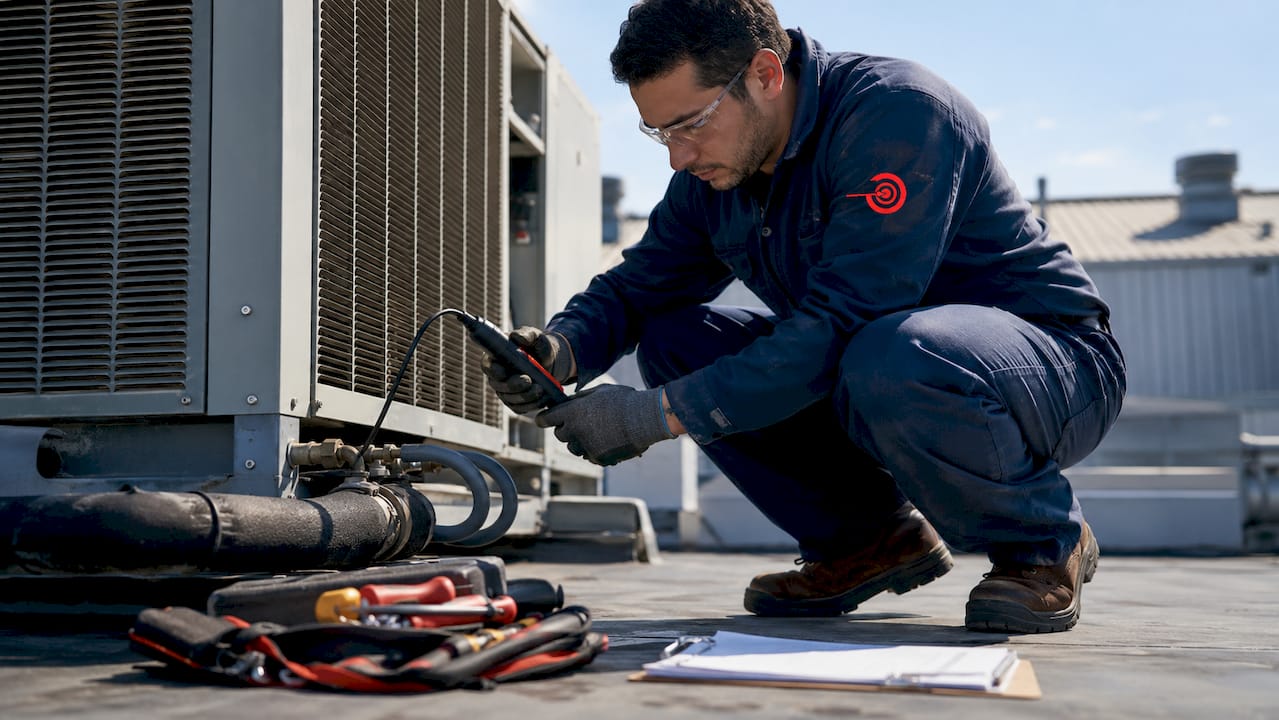
The most common leak sources are Schrader valves, evaporator coil joints, and brazed connections that develop micro-cracks over years of thermal cycling. Each of these points is reachable during a standard maintenance inspection. The problem is that many service calls result in a refrigerant recharge without locating and sealing the leak. Recharging without fixing the leak causes a cycle of recurring breakdowns, because the system loses charge again within weeks and the compressor runs in a starved condition.
Here is the correct sequence for handling refrigerant issues:
- Measure system pressures before adding any refrigerant. Low suction pressure confirms undercharge; high discharge pressure may indicate a different problem entirely.
- Perform a leak search using electronic leak detectors or UV dye. Never skip this step, even under time pressure.
- Repair the leak source before recharging. Valve replacements and coil repairs must happen first.
- Recharge to manufacturer specifications using a calibrated scale, not by pressure alone.
- Document the refrigerant type and charge weight in the unit’s service record for future reference.
Pro Tip: Ask your contractor to use an electronic leak detector rated for the specific refrigerant in your system. R-410A and R-22 require different sensor types. Using the wrong detector produces false negatives and leaves leaks undetected.
What role do thermostat and control system faults play?
Thermostat malfunctions are a frequently overlooked HVAC repair frequency reason. Thermostat issues cause approximately 20% of commercial HVAC service calls, and they often mimic mechanical failures. A technician dispatched for a “compressor not running” complaint may find nothing wrong with the compressor at all. The control board received a bad signal from a drifted sensor, and the unit never received a valid call to run.
Sensor drift is the most common control system fault in commercial buildings. Temperature sensors lose calibration over time, especially in spaces with high humidity or chemical exposure. When a sensor reads 5°F higher than actual room temperature, the system short-cycles constantly, running brief bursts that never complete a full cooling cycle. Short-cycling accelerates compressor wear faster than almost any other operating condition.
Wiring faults and setpoint errors add to the problem. In buildings with building automation systems (BAS) from vendors like Johnson Controls, Siemens, or Honeywell, a misconfigured setpoint schedule can force the HVAC system to fight against occupancy patterns all day. The system runs at full load during unoccupied hours and then struggles to recover when the building fills up.
Before calling a technician for a suspected mechanical failure, check these items yourself:
- Confirm the thermostat setpoint matches the intended schedule.
- Verify the thermostat is not in direct sunlight or near a heat-generating appliance.
- Check that the BAS schedule reflects current occupancy hours, especially after daylight saving time changes.
- Inspect thermostat wiring terminals for corrosion or loose connections.
How does system sizing affect HVAC breakdown frequency?
System undersizing is a structural cause of HVAC performance issues that no amount of maintenance can fully correct. Increased building occupancy or equipment load pushes demand beyond the original HVAC design, causing premature wear on every major component. A system sized for 50 occupants running at 80 occupants will run at 100% capacity for extended periods, shortening compressor and blower motor life significantly.
The table below shows how building usage changes translate directly into HVAC stress:
| Building change | Effect on HVAC system | Likely repair outcome |
|---|---|---|
| Occupancy increase of 30%+ | Sustained high-load operation | Compressor overheating, frequent lockouts |
| New server room or kitchen added | Localized heat load spike | Undersized zone unit failure |
| Ductwork modified without rebalancing | Uneven airflow distribution | Hot/cold spots, blower motor strain |
| Exterior wall insulation removed | Increased heat gain | System runs continuously, refrigerant issues |
Ductwork design is equally important. A system with correctly sized equipment but undersized duct runs will still produce the same symptoms as an undersized unit. Airflow balancing, measured in cubic feet per minute (CFM) per zone, should be verified any time the building layout changes. The HVAC maintenance checklist for your building should include a note of the original design load so you can compare it against current usage.
Why do short-term repairs fail to stop recurring HVAC problems?
Patch repairs are the primary reason commercial HVAC problems repeat. Focusing only on symptoms without root cause investigation leads to repeated breakdowns and rising costs. A refrigerant recharge that takes 20 minutes costs far less than a compressor replacement, so it is tempting to stop there. The compressor replacement arrives three months later anyway, plus the cost of the recharge.
Wrong failure diagnosis can cost between $2,000 and $45,000 in unnecessary HVAC repairs. That range reflects real scenarios: replacing a compressor when the actual fault was a failed run capacitor, or installing a new air handler when the problem was a blocked condensate drain. Accurate diagnosis requires time, proper instruments, and access to the unit’s service history.
Documenting diagnostics and repair history is the most underused tool in commercial HVAC management. A log that records fault codes, refrigerant charges, filter change dates, and technician findings turns isolated service calls into a pattern. That pattern reveals whether you are dealing with a failing component, a design problem, or a maintenance gap. Without it, every service call starts from zero.
- Require written diagnostics from every technician visit, not just an invoice line item.
- Track fault codes from the unit’s control board. Repeated identical codes point to a root cause that was never fixed.
- Review repair history records before authorizing any repair over $500.
- Ask your contractor whether the proposed repair addresses the cause or the symptom.
Key takeaways
Frequent commercial HVAC repairs are preventable when facility managers address root causes, not just symptoms, through consistent maintenance, accurate diagnostics, and proper system sizing.
| Point | Details |
|---|---|
| Airflow restrictions dominate | Dirty filters cause 40% of service calls; replace every 30–60 days in commercial settings. |
| Refrigerant leaks compound costs | Recharging without fixing the leak doubles electricity use and leads to compressor failure. |
| Thermostat faults mimic mechanical failures | About 20% of service calls trace back to control system errors, not broken equipment. |
| System sizing must match current load | Occupancy increases beyond original design limits accelerate component wear across the board. |
| Patch repairs increase long-term costs | Misdiagnosis and band-aid fixes can generate $2,000–$45,000 in avoidable repair expenses. |
What I’ve learned from watching the same systems fail twice
I have seen the same commercial rooftop unit serviced four times in 18 months. Each visit produced a different invoice: capacitor, contactor, refrigerant recharge, then finally a compressor. The total cost exceeded $8,000. A single thorough diagnostic visit at the start, including a leak search and airflow measurement, would have identified the root cause for under $400.
The pattern I see most often is this: facility managers approve the cheapest repair option under time pressure, the system runs for a few weeks, then fails again. The second failure always costs more than the first would have if it had been properly diagnosed. Reactive maintenance does not save money. It defers costs and adds interest.
The facilities that run the fewest commercial HVAC repair calls share one habit: they treat their HVAC units as assets with documented histories, not as appliances to be fixed when they break. They schedule preventive AC tune-ups twice a year, log every fault code, and compare current performance data against baseline readings from commissioning. When a number drifts, they investigate before it becomes a failure.
Technology helps. Smart thermostats and connected BAS platforms from vendors like Honeywell and Johnson Controls can flag abnormal runtime patterns weeks before a component fails. But the technology only works if someone is watching the data. Assign one person in your facility team to review HVAC performance reports monthly. That single habit will reduce your repair frequency more than any individual fix.
— Warren
How Target Air Systems reduces your repair frequency
Target Air Systems works with commercial clients across Massachusetts to replace reactive repair cycles with structured maintenance programs. The team of screened, certified technicians performs thorough diagnostics on every visit, identifying root causes rather than applying temporary fixes. Services include AC maintenance and tune-up packages designed to catch airflow restrictions, refrigerant issues, and control system faults before they become emergency calls. Target Air Systems provides upfront pricing with no hidden fees, and service is completed before payment is required. If your building is in the Canton or Framingham service areas, contact Target Air Systems to schedule a diagnostic visit and start building a maintenance history that actually reduces costs.
FAQ
What is the most common cause of commercial HVAC repairs?
Dirty or clogged air filters are the most common cause, accounting for 40% of commercial HVAC service calls. They restrict airflow, freeze coils, and force blower motors to overwork until they fail.
How do refrigerant leaks lead to repeated HVAC breakdowns?
Refrigerant leaks reduce cooling capacity by 30–40% and nearly double electricity consumption. Recharging without sealing the leak causes the cycle to repeat until the compressor fails entirely.
Can a thermostat really cause major HVAC failures?
Yes. Thermostat and control system faults cause approximately 20% of commercial HVAC service calls and often mimic compressor or motor failures, leading to misdiagnosis and unnecessary part replacements.
How does building occupancy affect HVAC repair frequency?
Increasing occupancy beyond the system’s original design load forces the equipment to run at sustained high capacity. This accelerates compressor wear, causes repeated lockouts, and shortens the service life of every major component.
What is the difference between a patch repair and a root cause repair?
A patch repair addresses the visible symptom, such as a low refrigerant charge, without finding why the problem occurred. A root cause repair identifies and fixes the underlying fault, such as a leaking valve, so the same failure does not recur.