


Air conditioning repair is defined as the diagnosis and correction of specific component failures within a residential cooling system. Natick, MA air conditioning repair types range from quick electrical fixes like capacitor replacement to complex refrigerant leak repairs that require EPA certification. Knowing which repair category applies to your situation helps you set realistic expectations on cost, timeline, and urgency. Target Air Systems handles all of these repair types for Natick homeowners, with certified technicians and upfront pricing on every job.
1. What are the main Natick MA air conditioning repair types?
The most common residential AC repair categories are electrical component repairs, refrigerant system repairs, thermostat repairs, and airflow repairs. Each category targets a distinct part of your cooling system. A diagnostic visit covers visual inspections, electrical tests, refrigerant checks, and a homeowner debrief. Technicians follow a structured, measurement-first approach before recommending any repair, which prevents unnecessary part replacements and repeat service calls.
Understanding these categories matters because the repair type determines the cost, the time required, and whether you need a certified specialist. Homeowners who know the difference between a capacitor swap and a refrigerant recharge can ask better questions and avoid being oversold on unnecessary work.
2. Capacitor and contactor repairs: common electrical fixes
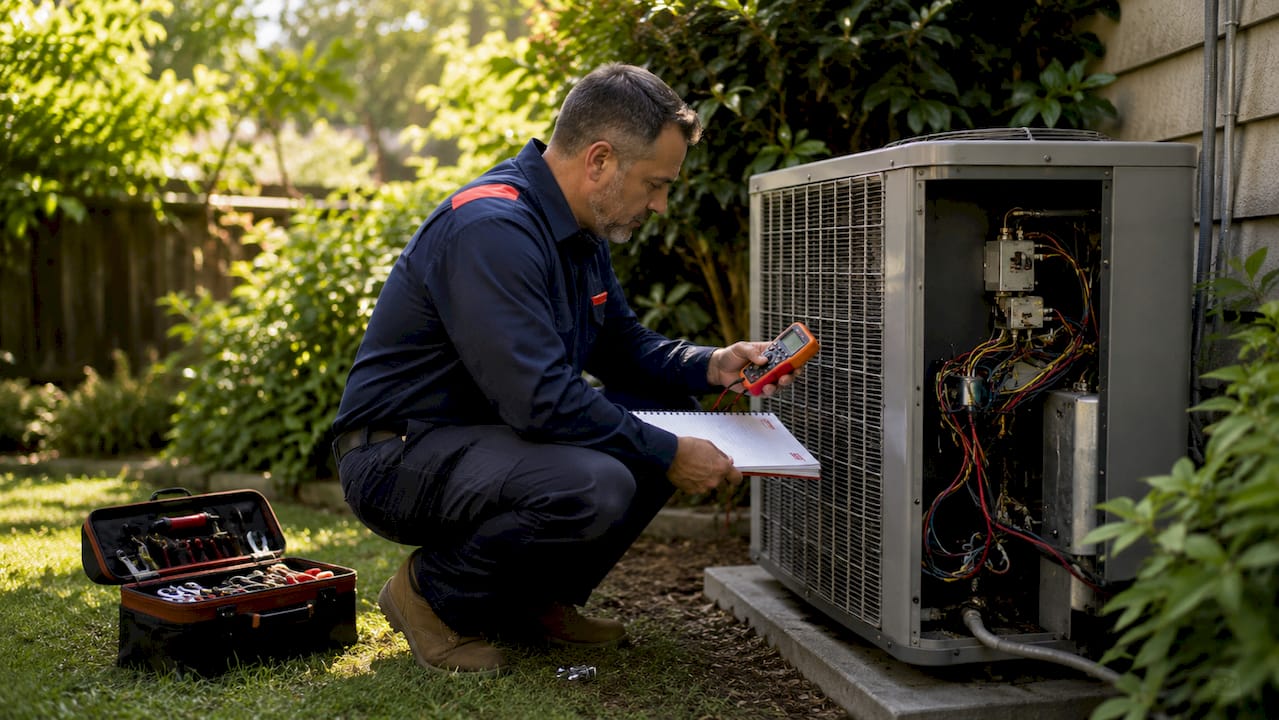
Capacitors and contactors are the electrical workhorses of your AC system. The capacitor stores and releases energy to start the compressor and fan motors. The contactor acts as a relay switch that sends power to those motors when your thermostat calls for cooling. When either part fails, your AC either refuses to start or shuts down mid-cycle.
Replacing capacitors and contactors is one of the most common and cost-effective electrical repairs on residential systems. Symptoms that point to these parts include:
- AC unit fails to start despite the thermostat calling for cooling
- Blower motor runs but the compressor does not engage
- Humming or clicking sounds from the outdoor unit
- System starts briefly, then shuts off immediately
A standard capacitor or contactor replacement takes 30–60 minutes. The technician isolates power, tests the component with a multimeter, swaps the failed part, and verifies system operation before leaving. Capacitor replacement runs around $500, while contactor repair averages around $600, based on typical market rates for the region.
Pro Tip: Never attempt capacitor replacement yourself. Capacitors hold a charge even when the unit is powered off and can deliver a dangerous electrical shock without proper discharge tools.
3. Refrigerant leak detection and repair: restoring cooling efficiency
A refrigerant leak is one of the more serious AC repair types because it affects both cooling performance and energy costs. When refrigerant levels drop, the system works harder to reach your set temperature and often fails to get there. Left unaddressed, low refrigerant causes the compressor to overheat and fail, turning a moderate repair into a major replacement.
The repair process follows a specific sequence:
- Leak detection. The technician uses an electronic leak detector or UV dye to locate the breach in the refrigerant lines or coil.
- Brazing or sealing. The damaged section is repaired using brazing techniques on copper lines or with approved sealants on minor leaks.
- System evacuation. A vacuum pump removes all moisture and air from the refrigerant circuit before recharging.
- Recharge by weight. Refrigerant is added to the exact manufacturer specification, measured by weight, not pressure alone.
- Performance verification. The technician checks supply air temperature and system pressures to confirm the repair worked.
Refrigerant leak repairs typically take 2–6 hours. Technicians must hold EPA Section 608 Type II certification to handle refrigerants legally and safely. Newer refrigerants like R-454B require additional training beyond the standard certification. This is not a repair any unlicensed contractor should touch.
Pro Tip: Scheduling annual AC maintenance reduces the chance of refrigerant leaks developing undetected. A technician catches small leaks before they drain the system completely.
4. Thermostat replacement and calibration: restoring temperature control
A faulty thermostat is often the simplest fix in the AC repair category, but it causes significant discomfort when overlooked. Common thermostat problems include:
- Inaccurate temperature readings that cause the system to short-cycle
- Blank or unresponsive display screens
- AC running continuously without reaching the set temperature
- System failing to turn on despite correct settings
Thermostat replacement takes 30 minutes to 1 hour, making it one of the fastest repairs on the list. Before scheduling a service call, check the thermostat batteries and confirm the settings are correct. If the unit is more than 10 years old or uses an outdated wiring configuration, replacement is usually more cost-effective than recalibration.
When selecting a replacement thermostat, confirm compatibility with your existing system. Multi-stage systems and heat pumps require thermostats with specific wiring support. A certified technician can identify the correct model and complete the swap without risking damage to the control board.
5. Blower motor and fan repairs: fixing airflow problems
The blower motor moves conditioned air through your ductwork and into your living spaces. The outdoor condenser fan pulls heat away from the refrigerant coil. When either fails, your system loses the ability to transfer heat effectively, and your home stays warm regardless of how long the AC runs.
Blower motor and condenser fan repairs vary widely in cost and time depending on component accessibility and failure complexity. Signs that point to a motor or fan problem include:
- Unusual grinding, squealing, or rattling sounds from the unit
- Weak or no airflow from supply vents
- Outdoor fan not spinning while the compressor runs
- System shutting down due to overheating
Blower motor repairs range from a simple capacitor replacement on the motor circuit to a full motor swap. A full motor replacement is more involved, often taking several hours depending on the unit’s configuration. Condenser fan motor repairs run from $650 to $2,800 depending on the motor type and labor required. Professional diagnosis is critical here because misidentifying the cause leads to repeat failures.
6. Comparing common AC repair types: timelines, costs, and when to call a pro
The table below gives Natick homeowners a clear side-by-side view of the most common AC repair types.
| Repair Type | Typical Timeline | Approximate Cost | Urgency Level |
|---|---|---|---|
| Capacitor replacement | 30–60 minutes | ~$500 | High |
| Contactor repair | 30–60 minutes | ~$600 | High |
| Refrigerant leak repair | 2–6 hours | Varies by severity | High |
| Thermostat replacement | 30–60 minutes | Low to moderate | Moderate |
| Blower motor replacement | 1–4 hours | $650–$2,800 | High |
| Compressor repair | 4–6 hours | High | Critical |
A standard diagnostic visit takes 45–60 minutes for routine issues and up to 90–120 minutes for complex troubleshooting. That time investment is worth it. Technicians who skip full diagnostics and replace parts by guesswork create repeat service calls.
Emergency situations require immediate action. Call for emergency air conditioning repair when:
- Indoor temperatures exceed safe levels for children or elderly residents
- The system produces burning smells or electrical odors
- The unit trips the circuit breaker repeatedly
- Refrigerant is visibly leaking or ice forms on the lines in July or August heat
Emergency after-hours AC repair typically adds a surcharge of around $250 on top of standard repair costs. Scheduling regular maintenance is the most reliable way to avoid that scenario. Routine preventive maintenance can reduce emergency repair costs by up to 40%. That figure reflects the real financial value of a seasonal tune-up.
Parts availability also affects timelines. Parts delays affect 25–35% of major AC repairs, adding 1–3 days to completion. Systems over 10 years old face this risk most often. Early diagnosis gives technicians time to source parts before a breakdown forces an emergency order.
Key takeaways
The most effective approach to Natick AC repairs is matching the specific repair type to the correct certified technician, with full diagnostics completed before any part is replaced.
| Point | Details |
|---|---|
| Electrical repairs are fast | Capacitor and contactor replacements typically finish in 30–60 minutes at predictable costs. |
| Refrigerant work requires certification | Only EPA Section 608 Type II certified technicians can legally handle refrigerant repairs. |
| Thermostat fixes are often overlooked | A miscalibrated or failed thermostat causes many AC complaints that homeowners attribute to bigger problems. |
| Emergency repairs cost more | After-hours service adds roughly $250 in surcharges, making preventive maintenance a clear financial priority. |
| Diagnostics prevent repeat failures | Full component-level and system-level checks stop the cycle of recurring breakdowns. |
What I have learned about AC repairs after years in Natick homes
Most homeowners call for AC service expecting a quick fix. What they actually need is a thorough diagnosis. I have seen too many cases where a technician swapped a capacitor, collected payment, and left, only for the same unit to fail two weeks later because the root cause was a failing compressor drawing excess current. The capacitor was a symptom, not the problem.
The repair types covered here are not interchangeable. Refrigerant work done by an uncertified technician is not just illegal under EPA regulations. It is genuinely dangerous and leaves the system worse than before. Electrical repairs done without proper discharge procedures put homeowners at risk. The value of a certified technician is not just compliance. It is accuracy.
Natick summers push AC systems hard. Units that skip annual maintenance accumulate small problems that compound into expensive failures. Viewing a seasonal AC tune-up as a repair-prevention tool rather than an optional expense changes how you manage your home comfort budget. The homeowners who call me in a panic in late July are almost always the ones who skipped the spring maintenance visit.
— Warren
Target Air Systems: certified AC repair for Natick homeowners
Target Air Systems covers every repair type discussed here, from capacitor swaps to refrigerant leak repairs, with screened and certified technicians who provide upfront pricing before any work begins. No hidden fees. No payment required until the job is complete. Natick homeowners can request a same-day service quote online or by phone. For homeowners who want to stay ahead of breakdowns, Target Air Systems also offers air conditioning services including preventive maintenance plans that reduce the risk of mid-summer failures. Local, reliable, and backed by 5-star reviews across the community.
FAQ
What are the most common AC repair types in Natick, MA?
The most common repairs are capacitor replacement, contactor repair, refrigerant leak fixes, thermostat replacement, and blower motor repairs. Each targets a specific component that causes cooling failure when it breaks down.
How long does a typical AC repair take?
Routine repairs like thermostat or capacitor replacement take 30–60 minutes. Refrigerant leak repairs take 2–6 hours, and compressor repairs can take 4–6 hours or longer.
When should I call for emergency air conditioning repair?
Call immediately if your home reaches unsafe temperatures, the unit produces burning smells, the breaker trips repeatedly, or ice forms on the refrigerant lines during peak summer heat.
Do AC technicians need special certification for refrigerant repairs?
Yes. Technicians must hold EPA Section 608 Type II certification to legally handle refrigerants, including newer options like R-454B that require additional training.
Can I do any AC repairs myself?
Thermostat battery replacement and basic filter changes are safe for homeowners. All electrical, refrigerant, and motor repairs require a certified technician to avoid safety risks and system damage.