


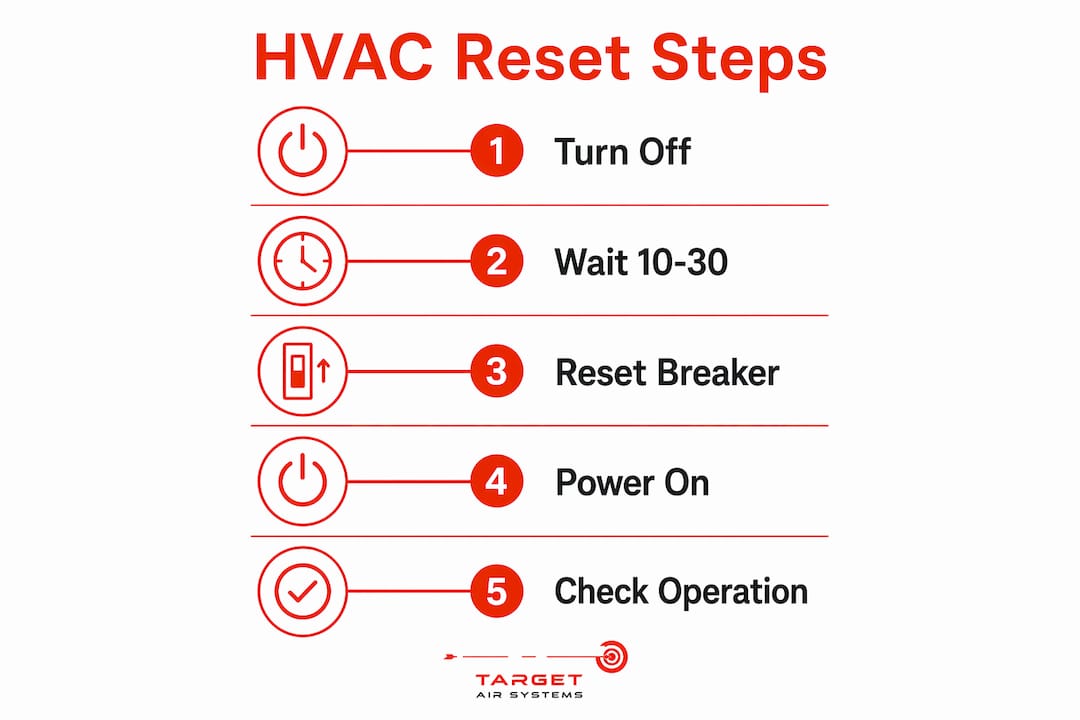
Resetting an HVAC system properly means power cycling the thermostat, circuit breaker, and outdoor disconnect switch in a specific sequence, then waiting 10–30 minutes before restoring power to clear fault states and restore normal heating or cooling. This procedure applies to split systems with indoor air handlers and outdoor condensers, which are the most common setup in American homes. Done correctly, a reset clears control board lockouts triggered by power surges, tripped safeties, or transient electrical faults. Done wrong, it can damage your compressor or mask a problem that needs a licensed technician. Before you touch anything, know what you are dealing with.
What safety precautions should you take before resetting your HVAC system?
Safety comes first, and there are specific conditions where you should never attempt a reset. Never reset your system if you smell gas, see smoke, or hear electrical buzzing from the unit. Those signs point to active hazards that a power cycle will not fix and could make worse. Call a licensed technician immediately in those situations.
When conditions are safe to proceed, run through this checklist before touching the thermostat or breaker:
- Thermostat set to OFF. The system must not be calling for heating or cooling when you cut power. Turning it off first prevents voltage spikes to the control board.
- Air filter checked. A clogged filter is one of the most common reasons HVAC systems lock out in the first place. Check airflow basics like filters before assuming the system needs a reset. Replacing a dirty filter before you reset prevents the same lockout from happening again within hours.
- Thermostat batteries checked. Low batteries cause erratic thermostat behavior that mimics system faults. Swap them out if the display is dim or flickering.
- Identify your components. Know where your breaker panel is, which breakers control the air handler and the outdoor condenser (they are often separate), and whether your outdoor unit has a disconnect switch mounted on the wall nearby.
- Have a timer ready. The wait period is not optional. You need to track 10–30 minutes accurately to allow capacitors and control boards to fully discharge.
Pro Tip: Take a photo of your breaker panel labels before you start. Many panels have faded or mislabeled breakers, and flipping the wrong one wastes time and creates confusion.
How to reset an HVAC system properly: step-by-step
A proper HVAC reset follows a specific order: thermostat OFF, breakers OFF, outdoor disconnect OFF, wait, then restore power in reverse. Skipping steps or rushing the sequence is the most common reason resets fail. Follow each step in order.
-
Set the thermostat to OFF. Do not set it to a different temperature. Switch the system mode to OFF completely. This stops the system from demanding power while you work on the breakers.
-
Turn off the HVAC breakers at your electrical panel. Most split systems have two breakers: one for the indoor air handler and one for the outdoor condenser. Flip both fully to the OFF position until you feel them click. A breaker that is only halfway tripped is not fully off.
-
Turn off the outdoor disconnect switch. This is a small box mounted on the exterior wall near your outdoor condenser unit. Open the cover and pull out the disconnect block or flip the switch to OFF. Not all homes have this, but if yours does, use it.
-
Wait 10–30 minutes. This is the step most homeowners skip, and it is the most important one. Waiting during a reset is critical to avoid compressor damage and allow refrigerant pressure to equalize across the system. Set a timer. Do not guess.
-
Turn the outdoor disconnect back ON (if you used it). Replace the disconnect block or flip the switch back to the ON position and close the cover.
-
Turn the HVAC breakers back ON at the panel. Flip both breakers firmly to ON. You may hear a click or a brief hum from the system as it powers up.
-
Set the thermostat back to COOL or HEAT with your desired temperature. Set it at least 5 degrees below (for cooling) or above (for heating) the current room temperature so the system has a clear call to run.
-
Wait for the system to start. Built-in startup delays of up to 10 minutes are normal after power restoration. The indoor blower and outdoor compressor both have anti-short-cycle timers that prevent immediate restarts. Do not panic if nothing happens right away.
-
Check for the physical reset button on your outdoor condenser if the system still does not start. Some outdoor condensers have a small red reset button located near the copper refrigerant lines. Press and hold it for 3–5 seconds to clear a mechanical lockout.
Pro Tip: After the system starts, stand near the outdoor unit for two minutes. You should hear the compressor hum and feel air moving across the condenser coil. No sound after 10 minutes means the reset did not hold and something else is wrong.
What are common mistakes to avoid when troubleshooting an HVAC reset?
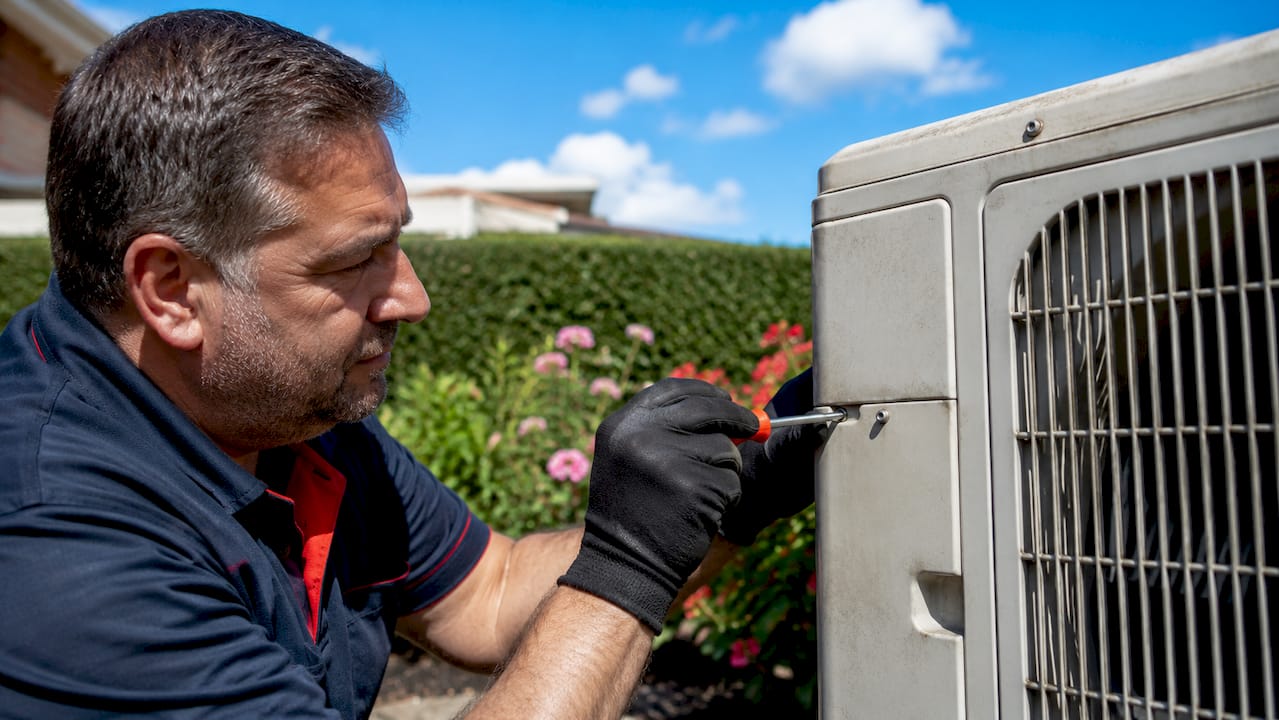
The most dangerous mistake homeowners make is repeatedly flipping the breaker when the system does not respond. Repeated immediate breaker trips indicate a real fault in the system. Continuing to reset under those conditions risks electrical damage or fire. One reset attempt is the limit. If the breaker trips again right after you restore power, stop and call a technician.
Here are the most common pitfalls to avoid:
- Rushing the wait time. Ten minutes is the minimum. Thirty minutes is safer, especially in hot weather when refrigerant pressure takes longer to equalize.
- Skipping the filter check. Airflow restrictions and mechanical faults often trigger system lockouts that a reset does not fix permanently. If the filter is clogged, the system will lock out again within hours of restarting.
- Ignoring the thermostat. A thermostat in FAN ONLY mode or set to the wrong temperature will not trigger the compressor to run. Confirm the mode and setpoint before concluding the reset failed.
- Assuming the reset fixed everything. A reset clears fault states. It does not repair failing capacitors, refrigerant leaks, or condensate drain clogs. If the system runs for an hour and then shuts off again, the underlying cause is still there.
Pro Tip: If your system trips the breaker more than once in a single season, schedule a diagnostic visit before summer peaks. A failing capacitor costs far less to replace than a burned-out compressor.
Signs that require a professional technician rather than another reset attempt include a breaker that trips immediately after being restored, a burning smell from any component, visible ice on the refrigerant lines after the system runs, and water pooling around the indoor air handler. These are not reset problems. They are repair problems. Consulting a year-round maintenance checklist can help you catch these issues before they force an emergency call.
How do reset methods vary by HVAC system type?
Not every HVAC system resets the same way. The procedure above covers the most common setup: a split system with a separate indoor air handler and outdoor condenser. Other system types have additional steps or different reset logic entirely.
| System Type | Reset Method | Key Difference |
|---|---|---|
| Split AC (standard) | Thermostat OFF, both breakers OFF, outdoor disconnect OFF, wait 30 min | Two separate breakers for indoor and outdoor units |
| Heat Pump | Same as split AC, but check for auxiliary heat breaker | May have a third breaker for backup electric heat strips |
| Gas Furnace | Thermostat OFF, furnace breaker OFF, wait 10 min | Some units have a physical power switch on the furnace cabinet |
| Smart Thermostat (Nest, Ecobee) | Software reboot via app or display, plus breaker cycle if needed | Control board logic may require app-based reset before power cycle |
| Packaged Unit (rooftop) | Single breaker at panel, disconnect at unit | All components in one cabinet; no separate outdoor disconnect |
Many modern HVAC outdoor units no longer have physical reset buttons. They rely entirely on breaker resets and control board software to clear faults. If you do not see a red button on your condenser, that is normal. The breaker cycle is your reset.
Smart thermostats like Nest and Ecobee add a layer of complexity. Their control boards store fault history and may need a software reboot through the app or display menu before a full power cycle takes effect. Check the manufacturer’s app for any active error codes before cutting power at the breaker.
Pro Tip: Before attempting any reset, locate your system’s model number on the data plate and search for the manufacturer’s reset procedure online. Carrier, Trane, Lennox, and Rheem each publish unit-specific guidance that may differ from the general steps above.
For homeowners considering whether a recurring reset need signals a deeper problem, the HVAC startup process guide from E320 Air covers how systems are designed to start and what normal operation looks like after a reset.
Key takeaways
Resetting an HVAC system properly requires the correct sequence, adequate wait time, and a filter check before you restore power.
| Point | Details |
|---|---|
| Correct sequence matters | Turn off thermostat, then breakers, then outdoor disconnect before waiting. |
| Wait the full 10–30 minutes | Rushing the wait period risks compressor damage and failed resets. |
| Check the filter first | A clogged filter causes repeat lockouts that no reset will permanently fix. |
| One reset attempt only | If the breaker trips again immediately, stop and call a licensed technician. |
| System type changes the steps | Heat pumps, furnaces, and smart thermostats each have additional reset considerations. |
What i’ve learned after watching homeowners rush this process
Most homeowners who call a technician after a failed reset attempt made the same mistake: they skipped the wait. I have seen people flip the breaker off and back on in under a minute, then conclude the system is broken. It is not broken. The compressor simply cannot restart under residual refrigerant pressure, and forcing it to try shortens its lifespan significantly.
The other pattern I see constantly is the reset that works once and then fails again two days later. That is not a reset problem. That is a maintenance problem. A dirty evaporator coil, a condensate pan that is nearly full, or a capacitor reading below spec will trip the safety controls every time conditions get hot enough. A reset buys you time. It does not buy you a repair.
My honest advice: do the reset once, correctly, and watch the system for 24 hours. If it runs without issue, great. If it trips again or runs poorly, the system is telling you something. At that point, the cost of a diagnostic visit is far lower than the cost of ignoring the signal. Preventative maintenance, covered well in resources like Target Air Systems’ new system maintenance guide, is what keeps reset needs rare rather than routine.
— Warren
When to call target air systems instead of resetting again
If your reset did not hold, or if you are not comfortable working near your breaker panel, Target Air Systems is ready to help. Their certified technicians serve homeowners across Framingham and Canton, providing upfront pricing with no hidden fees and no payment required until the job is done. Whether you need a diagnostic visit after a failed reset, an AC repair for a recurring fault, or a seasonal tune-up to prevent lockouts before they start, Target Air Systems handles it with the same 5-star professionalism that has made them a trusted name in the Natick, MA area. Call them before a small fault becomes a full system failure.
FAQ
What does resetting an HVAC system actually do?
A reset clears fault states stored in the control board by fully cutting power to all components in sequence. This allows safety lockouts triggered by power surges or transient faults to clear so the system can restart normally.
How long should i wait during an HVAC reset?
Wait at least 10 minutes and up to 30 minutes between turning off power and restoring it. This allows refrigerant pressure to equalize and capacitors to fully discharge, protecting the compressor on restart.
Why does my HVAC keep tripping the breaker after a reset?
Repeated breaker trips after a reset signal an underlying electrical or mechanical fault, such as a failing capacitor, short circuit, or refrigerant issue. Stop resetting and schedule a professional diagnostic visit.
Do all outdoor HVAC units have a physical reset button?
No. Many modern outdoor condensers rely entirely on breaker resets and control board logic to clear faults, with no physical button present. If you do not see a red button near the refrigerant lines, use the breaker cycle procedure instead.
Can i reset a smart thermostat the same way as a standard thermostat?
Smart thermostats like Nest and Ecobee may require a software reboot through their app or display menu in addition to a breaker cycle. Check the manufacturer’s app for active error codes before cutting power at the panel.