


A new HVAC system requires regular preventive maintenance from the very first year of operation to protect its efficiency, lifespan, and manufacturer warranty. Most homeowners assume a brand-new unit runs itself for years without attention. That assumption is the single most expensive mistake you can make. Industry data shows a well-maintained system consumes 15 to 25% less energy and can last up to 20 years, compared to 12 years for a neglected one. Understanding why new HVAC system needs maintenance is the foundation of protecting one of the largest investments in your home.
Why does a new HVAC system need maintenance right away?
New HVAC systems go through a break-in period that most homeowners never hear about at installation. Factory settings, refrigerant charge levels, and airflow calibrations all need early verification once the system runs under real-world conditions in your home. New systems require early checks to catch installation variables before they compound into wear. A technician who installs a system perfectly on paper may still leave minor calibration gaps that only show up after a few weeks of operation.
Preventive HVAC maintenance during this break-in window catches those gaps before they cost you money. Think of it the same way you treat a new car: you change the oil at 3,000 miles even though the engine is brand new, because early wear particles need to be cleared before they cause damage. Your HVAC system follows the same logic. Skipping early service means small inefficiencies quietly grow into mechanical strain.
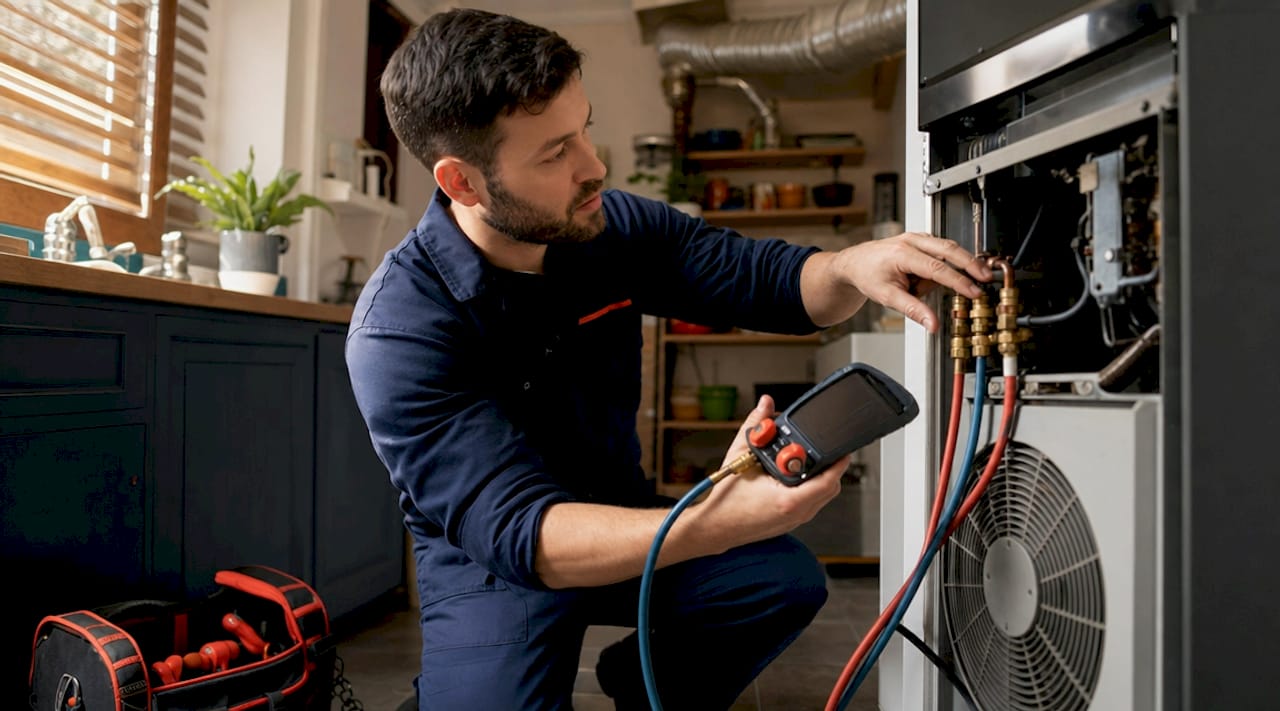
The importance of HVAC maintenance is not just about fixing problems. It is about confirming that everything installed correctly is also operating correctly. Those are two different things, and only a professional inspection confirms both.
How does maintenance affect energy efficiency and utility bills?
Dirty filters and coils are the leading cause of efficiency loss in residential HVAC systems, and dust accumulates within months even in a new unit. Clogged filters restrict airflow, forcing the blower motor to work harder and run longer to reach your thermostat’s set temperature. That extra runtime shows up directly on your energy bill every month.
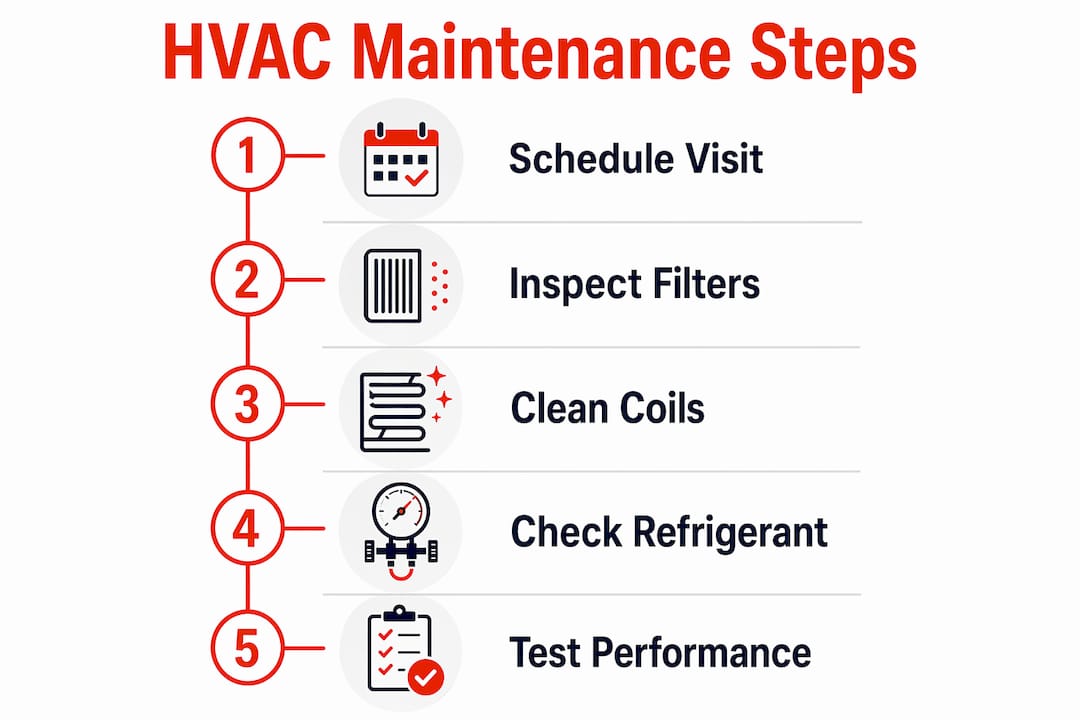
A well-maintained system uses 15 to 25% less energy than a neglected one. For a typical New England home running a system through both heating and cooling seasons, that gap translates to hundreds of dollars annually. Regular HVAC system upkeep keeps the coils clean, the refrigerant at the correct charge, and the airflow balanced so the system reaches temperature quickly and shuts off on schedule.
Pro Tip: Replace your air filter every 30 to 60 days during peak heating and cooling seasons. A clogged filter is the fastest way to turn a new, efficient system into an expensive one.
Here is what efficiency loss looks like in practice without regular service:
- Dirty evaporator coils reduce heat transfer, causing the compressor to run longer cycles
- Low refrigerant from a minor leak forces the system to work harder to move heat
- Blocked condensate drains cause humidity buildup, making your home feel warmer and triggering more cooling cycles
- Loose electrical connections increase resistance, raising energy draw on motors and controls
- An uncalibrated thermostat causes the system to overshoot or undershoot temperature targets
Each of these issues is caught and corrected during a standard AC maintenance visit. Left unaddressed, they stack on top of each other until the system is operating at a fraction of its rated efficiency.
Does skipping maintenance void your new HVAC warranty?
Skipping professional service does not just hurt performance. It can eliminate your warranty coverage entirely. Manufacturers require documented professional service to uphold parts coverage, and DIY repairs or missed service intervals give them grounds to deny claims. A compressor replacement on a modern system can run $1,500 to $2,500. If your warranty is void because you skipped one annual visit, that cost falls entirely on you.
Most HVAC warranties from manufacturers like Carrier, Trane, and Lennox include language requiring proof of regular professional maintenance. That proof means dated service records with technician credentials, not just a receipt from a hardware store for a filter. Keeping detailed maintenance records including technician names, service dates, and performance readings is as important as the service itself.
“Proof of service is commonly required by HVAC manufacturers to validate parts coverage. Without it, even a system failure clearly caused by a factory defect can be denied under warranty terms.” — homeimprovementgate.com
Common warranty pitfalls homeowners face with new systems include:
- No documentation of who performed the service or when
- Using uncertified technicians whose work manufacturers do not recognize
- Performing refrigerant work without an EPA 608 certified technician
- Waiting until a breakdown to schedule the first service visit
- Assuming the installation company automatically enrolled the warranty without homeowner registration
The most expensive warranty mistake is a compressor burnout caused by low refrigerant. Refrigerant leaks are silent and slow. A professional check catches a low charge before the compressor overheats and seizes. Without that check, you face a repair bill that dwarfs the cost of a dozen maintenance visits.
What does an HVAC maintenance checklist actually include?
A layered approach combining homeowner tasks and professional semi-annual visits is the most effective way to extend equipment life and keep costs low. Knowing which tasks belong to you and which require a certified technician prevents both over-reliance and under-service.
What you handle monthly:
- Inspect and replace the air filter (every 30 to 60 days during active seasons)
- Clear debris from around the outdoor condenser unit (leaves, grass clippings, dirt)
- Check that supply and return vents are open and unobstructed
- Listen for unusual sounds during startup and operation
- Verify the thermostat is reading and responding accurately
What a certified technician handles twice per year:
- Clean evaporator and condenser coils
- Check and adjust refrigerant levels
- Flush the condensate drain line
- Test and tighten electrical connections
- Measure motor amperage and verify it falls within manufacturer specs
- Calibrate the thermostat
- Inspect the heat exchanger (for furnaces) for cracks
- Verify airflow across all zones
| Task | Who performs it | Frequency |
|---|---|---|
| Air filter replacement | Homeowner | Every 30 to 60 days |
| Outdoor unit cleaning | Homeowner | Monthly during active season |
| Coil cleaning | Certified technician | Twice per year |
| Refrigerant check | Certified technician | Twice per year |
| Electrical inspection | Certified technician | Twice per year |
| Drain flush | Certified technician | Quarterly or semi-annual |
Performance metrics like motor amperage and refrigerant pressure give technicians early warning signs that no visual inspection can catch. A motor drawing higher-than-normal amperage is weeks away from failure. Catching it during a routine visit costs under $100 to fix. Replacing the motor after it burns out costs $400 to $700.
Pro Tip: Schedule your first professional maintenance visit within 60 to 90 days of installation, not at the one-year mark. The break-in period is when small issues are cheapest to correct.
For homeowners with heat pump systems, the checklist expands to include reversing valve checks and defrost cycle verification, since heat pumps run year-round and accumulate wear faster than single-mode systems.
What happens when you skip maintenance on a new system?
The most persistent misconception about new HVAC systems is that they are self-sufficient for the first few years. Experts consistently stress that early and regular service catches small issues before they become costly failures. A new system is not immune to wear. It is simply starting from a better baseline.
Neglect produces a predictable pattern of decline:
- Month 1 to 6: Dust accumulates on coils and filters. Efficiency drops slightly but goes unnoticed.
- Month 6 to 12: Restricted airflow causes longer run cycles. Energy bills rise. Minor refrigerant loss begins.
- Year 1 to 2: Compressor works harder to compensate for low refrigerant. Electrical connections loosen from vibration.
- Year 2 to 3: A component fails. The repair bill arrives.
Reactive maintenance costs 3 to 9 times more than scheduled preventive care. Emergency service calls carry premium labor rates, expedited parts costs, and often require system downtime during the hottest or coldest days of the year. That is the worst possible time to discover your new system was never properly serviced.
The comfort impact is equally real. A system running at reduced efficiency struggles to maintain consistent temperatures, creates humidity imbalances, and circulates more airborne particles through your home. Pairing your HVAC upkeep with attic mold prevention is one way homeowners address the full picture of indoor air quality, since a poorly maintained system can contribute to moisture problems in adjacent spaces.
Key takeaways
Regular preventive maintenance is the single most important action a new HVAC owner can take to protect system efficiency, warranty coverage, and long-term reliability.
| Point | Details |
|---|---|
| Start maintenance immediately | Schedule the first professional visit within 60 to 90 days of installation, not after a year. |
| Maintenance saves real money | A maintained system uses 15 to 25% less energy and lasts up to 20 years versus 12 for neglected units. |
| Warranty requires documentation | Manufacturers like Carrier and Trane require proof of professional service to honor parts coverage. |
| Split the tasks correctly | Homeowners handle filters and outdoor cleaning monthly; certified technicians handle coils, refrigerant, and electrical twice per year. |
| Neglect compounds fast | Reactive repairs cost 3 to 9 times more than preventive visits and typically hit during peak weather demand. |
Why I tell every new HVAC owner the same thing on day one
After years of working with homeowners across Natick and the MetroWest area, the pattern I see most often is this: someone spends $8,000 to $12,000 on a new system, skips the first maintenance visit because “it’s brand new,” and calls us two years later with a compressor problem that voids their warranty. The system was not defective. It was just never checked after installation.
The break-in period is real, and it matters more than most installers communicate at the time of purchase. I have seen refrigerant charges that were slightly off from day one, causing the compressor to work under stress for 18 months before anyone noticed. A single visit in the first 90 days would have caught it for under $150. The repair cost $1,800.
My honest advice: treat maintenance as a subscription, not a reaction. Set two calendar reminders per year, spring and fall, and do not cancel them. Keep every service record in a folder, physical or digital. If you ever need to make a warranty claim, that folder is your only proof. The homeowners who never stress about their HVAC are the ones who never skipped a visit.
— Rich
Keep your new system protected with Target Air Systems
Target Air Systems serves homeowners across Natick, MA and surrounding MetroWest communities with certified HVAC maintenance built specifically for new system owners. Their technicians arrive with upfront pricing, no hidden fees, and a checklist that covers every component manufacturers require for warranty compliance. You do not pay until the job is complete. For cooling season readiness, their AC tune-up service covers coil cleaning, refrigerant verification, electrical testing, and full performance documentation. For year-round coverage, their furnace maintenance program keeps heating systems running at peak efficiency through every New England winter. Scheduling your first visit now is the simplest way to protect the investment you just made.
FAQ
How soon should I schedule maintenance on a new HVAC system?
Schedule the first professional maintenance visit within 60 to 90 days of installation. The break-in period is when factory settings and installation variables need early verification to prevent premature wear.
Does a new HVAC system warranty require maintenance records?
Most manufacturers require documented proof of professional service to honor parts coverage. Missing service records give manufacturers grounds to deny warranty claims, even for failures caused by factory defects.
How often should a new HVAC system be serviced professionally?
Experts recommend professional HVAC maintenance at least twice per year, typically in spring before cooling season and in fall before heating season.
What can I do myself between professional visits?
Homeowners should inspect and replace air filters every 30 to 60 days and keep the outdoor condenser unit clear of debris. These two tasks alone prevent the most common causes of efficiency loss between professional visits.
Why does a new system still need maintenance if nothing is broken?
New systems undergo a break-in period where minor calibration gaps and installation variables can cause incremental wear long before a visible failure occurs. Preventive service catches those issues while they are still inexpensive to correct.